Synthetic Video Workflows: What Sora, Veo, and Kling Mean for Previsualization in 2026
Synthetic video is reshaping previsualization right now. Learn how Sora, Veo, and Kling are changing planning, pitching, and concept testing for creators and production teams.

By Movi AI Team
Movi AI Editorial Team
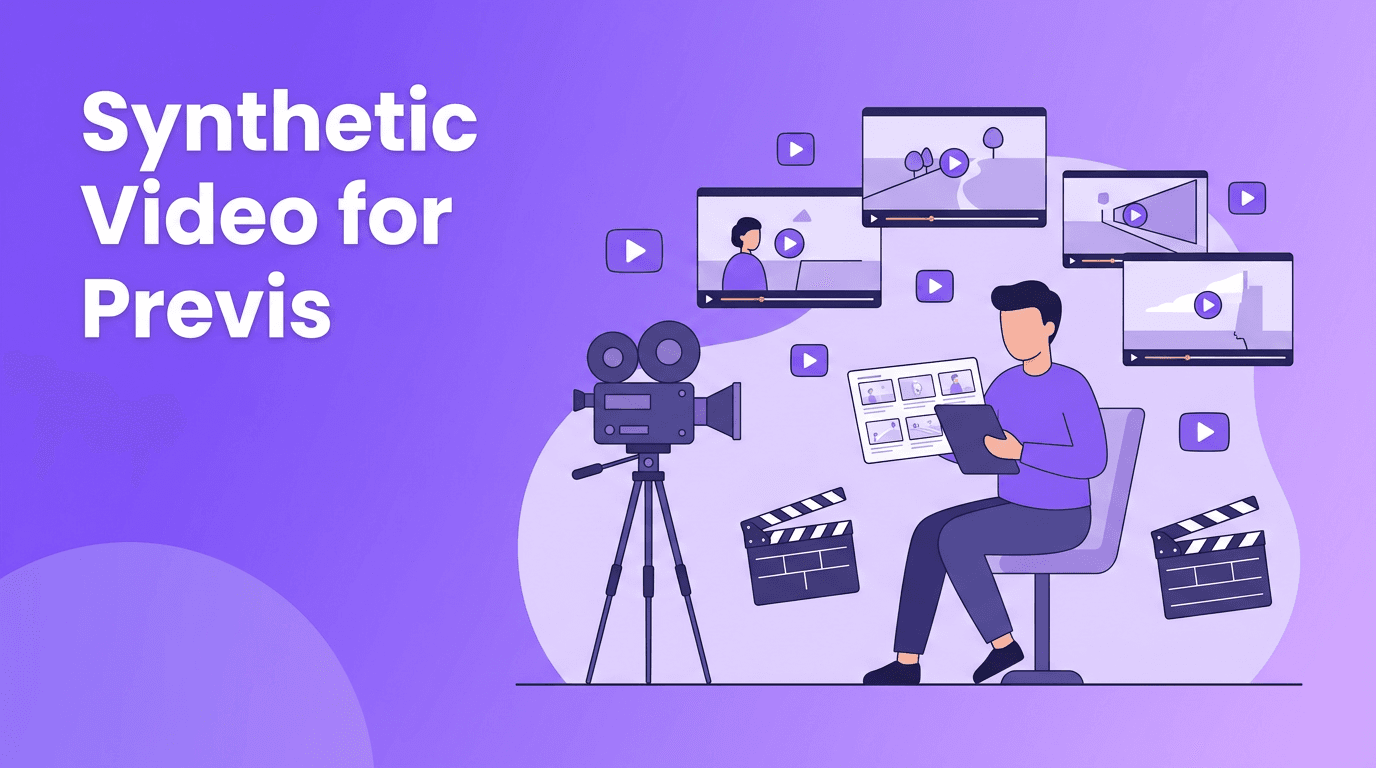
Synthetic video is becoming one of the most practical uses of modern visual AI, not as a replacement for full production, but as a faster way to test scenes, pitch ideas, and align teams before cameras roll. While attention often centers on headline model launches, the real shift happening now is how creators use generated motion for previsualization, concept approval, and iterative planning.
Why previsualization is the breakout use case
The latest model cycle has made short-form motion feel more coherent, cinematic, and usable for early-stage planning. Teams that once relied on static moodboards can now generate moving references for framing, lens feel, pacing, and scene transitions. That matters because pre-production delays are expensive, and synthetic video reduces ambiguity before production begins.
- Sora raised expectations around world simulation, longer scene coherence, and physically plausible motion.
- Veo pushed broader discussion around cinematic control, prompt responsiveness, and integration with creator ecosystems.
- Kling gained attention for impressive motion realism and fast social sharing among early adopters.
- Across the market, improvements in temporal consistency, character persistence, and camera movement are making generated clips more useful for planning rather than pure novelty.
What changed in the current model wave
Quality is no longer the only metric
A year ago, many generated clips looked flashy but collapsed under scrutiny. Now, the benchmark has moved beyond spectacle. Buyers and creators increasingly care about shot consistency, prompt adherence, editability, and how well a clip communicates a creative idea. The best systems are not merely making prettier outputs, they are helping users make faster decisions.
Consistency is improving where it matters
Hands, faces, object permanence, and scene continuity still break at times, but they are improving enough for internal reviews, ad mockups, music treatment pitches, and storyboard alternatives. This is especially relevant in agency and brand workflows, where early alignment can save thousands in production revisions.
"The near-term winner in synthetic media will not be the model that generates the most impressive demo, but the workflow that helps creators make decisions faster."
Sora, Veo, and Kling through a practical lens
For most professionals, the useful comparison is not who has the flashiest benchmark. It is which model is best for a given stage of work. Sora stands out in the broader conversation for ambitious scene simulation. Veo is often discussed in terms of ecosystem potential and production-friendly controls. Kling has earned attention for visually striking outputs that circulate quickly among creators testing social-first concepts.
- Use Sora-style outputs when you need concept-rich scenes that communicate atmosphere and spatial logic.
- Use Veo-like workflows when control, iteration, and integration matter more than one-off wow moments.
- Use Kling-type experiments when speed, motion energy, and visual hook are central to idea validation.
- Use *Movi AI* when you want an accessible mobile workflow to turn prompts, images, voice, or source footage into testable creative drafts quickly.
Turn ideas into moving concepts fast
Need to test a scene, campaign concept, or visual hook without waiting on a full edit? *Movi AI* helps you create draft-ready clips from text, images, speech, or existing footage.
Download Movi AIWhere adoption is happening right now
The strongest adoption is not always in blockbuster filmmaking. It is showing up in creative operations, where speed and iteration matter most. Recent enterprise surveys across generative AI categories consistently show rising experimentation in marketing, design, and content production, with many organizations moving from pilot projects into workflow integration. In video, the practical wins are usually pre-production and concept communication.
- Agencies use generated motion to pitch campaign directions before committing budget.
- E-commerce teams test visual concepts for product launches and seasonal promos.
- Music marketers prototype teaser aesthetics before a shoot or edit is finalized.
- Indie filmmakers build proof-of-concept clips to secure collaborators or funding.
- Social teams validate hooks and scene ideas before creating final assets natively for each platform.
What this means for the creator economy
The creator economy benefits when more people can prototype faster. Synthetic video lowers the cost of visual exploration, which gives solo creators and small teams capabilities that once required a motion department. The biggest shift is not that every creator will publish fully generated content. It is that more creators will use AI in the messy middle of ideation, testing, repurposing, and pre-edit development.
How to use this trend strategically in 2026
Focus on low-risk, high-speed applications first
- Start with concept validation, not final master assets.
- Use generated clips for internal approvals, pitch decks, and ad variations.
- Pair AI motion with real footage to keep output grounded and brand-safe.
- Build prompt libraries around camera language, product context, and audience intent.
- Track whether generated drafts reduce review cycles or improve publishing speed.
The next 12 months: realistic predictions
Expect the next phase of the market to center on control layers rather than raw generation alone. Creators will demand better style locking, reference preservation, shot matching, and edit-aware outputs. We will also see more multimodal workflows where scripts, voice, stills, product photos, and rough clips all become inputs to a single system. The result will be less friction between idea and visual prototype.
- Model competition will shift from novelty to reliability and controllability.
- Mobile-first creation will grow as more creators expect studio-like capabilities in apps.
- Platform-native formats for Reels, Shorts, and ads will become more automated.
- Brands will formalize governance around disclosure, licensing, and approval flows.
- The strongest tools will combine generation with editing, not treat them as separate worlds.
Frequently Asked Questions
What is synthetic video?
Synthetic video refers to video content generated or transformed by AI systems using prompts, images, audio, or source footage. It is often used for concept development, marketing, entertainment, and visual experimentation.
How are Sora, Veo, and Kling different?
They differ in output style, motion realism, prompt control, ecosystem fit, and creator access. The best choice depends on whether you prioritize concept quality, workflow control, or fast experimentation.
Is synthetic video good enough for professional use?
Yes, especially for previsualization, pitching, and draft content. For final commercial delivery, many teams still combine AI outputs with traditional editing and live-action assets.
How can creators use Movi AI in this workflow?
Creators can use *Movi AI* to turn prompts, images, speech, or existing videos into fast visual drafts for social content, marketing concepts, and creative testing directly from mobile.
Movi AICreate stunning AI videos in seconds!
Turn your ideas into professional videos with the #1 AI video maker.
Download Movi AI