Video Hook Strategy for Social Media: How to Win the First 3 Seconds
A strong video hook strategy can lift views, engagement, and conversions across TikTok, Reels, and Shorts. Learn platform-specific tactics, posting tips, and how AI speeds up production.

By Movi AI Team
Movi AI Editorial Team
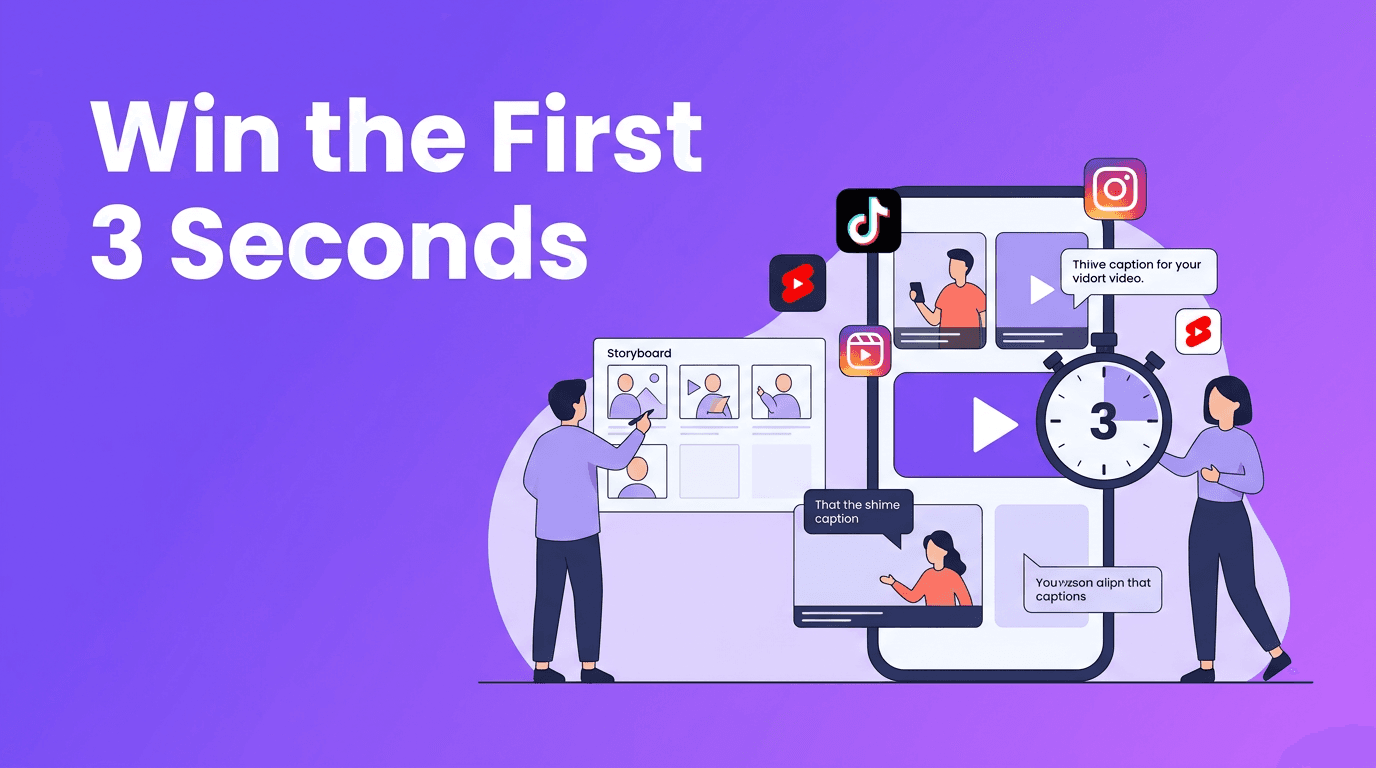
If your videos lose attention before the audience even understands the message, your video hook strategy needs work. On TikTok, Instagram Reels, and YouTube Shorts, the first few seconds shape watch time, engagement, and ultimately conversions. For brands and creators, better hooks are not just creative choices, they are performance levers.
Why the first 3 seconds decide performance
Short-form platforms are built around rapid content decisions. Users scroll fast, algorithms measure early engagement, and weak openings get filtered out quickly. A strong opening can increase completion rate, improve rewatch behavior, and send stronger quality signals to recommendation systems. That is why a video hook strategy should sit at the center of your wider social media video marketing plan.
- Attention comes before persuasion - if viewers do not stop, they never hear your offer.
- Retention affects reach - platforms reward videos that hold interest early and often.
- Better hooks improve ROI - stronger watch time means more value from every edit, ad dollar, and posting slot.
Platform-specific video lengths that support stronger hooks
There is no single ideal length for every platform. The best-performing format depends on viewer expectations, discovery behavior, and how quickly you deliver value. As a practical rule, lead with the outcome immediately, then expand only if the story earns the extra seconds.
TikTok
- Aim for 15 to 35 seconds for most educational, product, and trend-based posts.
- Use 1 to 2 second scene changes to keep momentum high.
- If you are teaching or storytelling, longer videos can work, but only when the payoff is clear upfront.
Instagram Reels
- Try 7 to 20 seconds for high-repeatability clips, demos, and visual reveals.
- Use captions early because many viewers watch without sound at first.
- For brands, concise Reels often outperform longer formats when the goal is profile visits or clicks.
YouTube Shorts
- Test 20 to 45 seconds for explainers, comparisons, and quick tutorials.
- The YouTube Shorts algorithm appears to reward satisfaction signals such as completion and repeat viewing, not just raw clicks.
- Front-load the promise and make the structure easy to follow.
A practical hook framework marketers can reuse
Instead of improvising every time, build repeatable hook types into your video content strategy. The strongest hooks are specific, visual, and outcome-driven. They make the viewer feel they will miss something useful if they keep scrolling.
- Problem hook - 'Most brands lose viewers in the first 3 seconds. Here is the fix.'
- Result hook - 'This one edit increased watch time by 28%.'
- Curiosity hook - 'The biggest mistake in Reels is not your caption.'
- Speed hook - 'Three ways to improve conversions from short videos today.'
- Contrast hook - 'Stop filming intros like this. Do this instead.'
The best short-form videos do not start with an introduction. They start with a reason to stay.
This approach matters whether you are learning how to go viral on TikTok, refining instagram reels tips, or testing a broader video marketing strategy for your brand. Hooks create the entry point. The rest of the video simply fulfills the promise.
Trending audio, hashtags, and posting schedules that actually help
How to use trending audio strategically
Trending audio can increase discoverability, but only when it matches the content format and audience expectation. Do not force a trend into a business message. Instead, look for sounds that support the pacing, mood, or joke structure of your post. For brands, light adaptation usually works better than full imitation.
- Use trending audio for awareness content, not every conversion-focused video.
- Keep spoken messaging readable with on-screen text in case the audio is low or muted.
- Test original voiceover alongside trends to build a recognizable brand presence.
Smarter hashtag strategy
Hashtags are no longer the main growth engine, but they still help platforms categorize your content. Use a small, relevant mix instead of stuffing broad tags. A good set might include one category term, one audience term, one topic term, and one branded tag.
- Avoid generic overload like #fyp #viral #trending on every post.
- Use hashtags that reflect search intent, such as #videomarketingforbusiness or #contentstrategy.
- Align hashtags with the actual spoken and on-screen keywords in the video.
Posting schedule basics
Consistency matters more than perfect timing, but timing still affects early engagement. For most brands, posting 3 to 5 short videos per week creates enough volume for testing without overwhelming production. Review platform analytics to find when your audience is active, then cluster experiments around those windows.
- Post at least twice per week on each priority platform.
- Batch-produce content so your schedule is driven by strategy, not last-minute filming.
- Track saves, shares, watch time, and clicks, not just views.
How AI is changing video marketing workflows
AI tools are transforming video marketing for business by reducing production time and increasing testing volume. Instead of spending days on one edit, marketers can create multiple variations, test hooks, repurpose assets, and localize messaging faster. This matters because modern social media video tips are less about one perfect post and more about running a smarter system.
With *Movi AI*, teams can turn text prompts, images, or existing footage into polished videos for TikTok, Reels, and Shorts. That makes it easier to test hook variations, adapt creative for different aspect ratios, and maintain a consistent publishing rhythm without a large production team.
Create more videos without slowing down
Use *Movi AI* to turn ideas, images, and footage into high-performing social videos faster. Test hooks, formats, and messaging at scale.
Download Movi AIA simple ROI checklist for your next video batch
- Define one primary goal per video - views, engagement, leads, or sales.
- Write 3 hook variations before you start editing.
- Match video length to platform behavior and content type.
- Include a clear CTA, even in top-of-funnel videos.
- Review results weekly and keep a swipe file of winning openings.
Frequently Asked Questions
What is the best video length for TikTok, Reels, and Shorts?
A strong starting point is 15 to 35 seconds for TikTok, 7 to 20 seconds for Instagram Reels, and 20 to 45 seconds for YouTube Shorts. The best length depends on how quickly you deliver value and maintain retention.
How do I improve the first 3 seconds of my video?
Lead with a clear result, problem, or curiosity gap immediately. Use fast visuals, on-screen text, and remove slow introductions.
Do hashtags still matter for social media video marketing?
Yes, but less than many marketers think. Use a small set of relevant hashtags that support discoverability and content categorization instead of relying on broad viral tags.
How are AI tools changing video marketing?
AI tools help marketers create more videos in less time, test multiple creative angles, and repurpose content across platforms. This improves efficiency and makes ongoing experimentation easier.
Movi AICreate stunning AI videos in seconds!
Turn your ideas into professional videos with the #1 AI video maker.
Download Movi AI