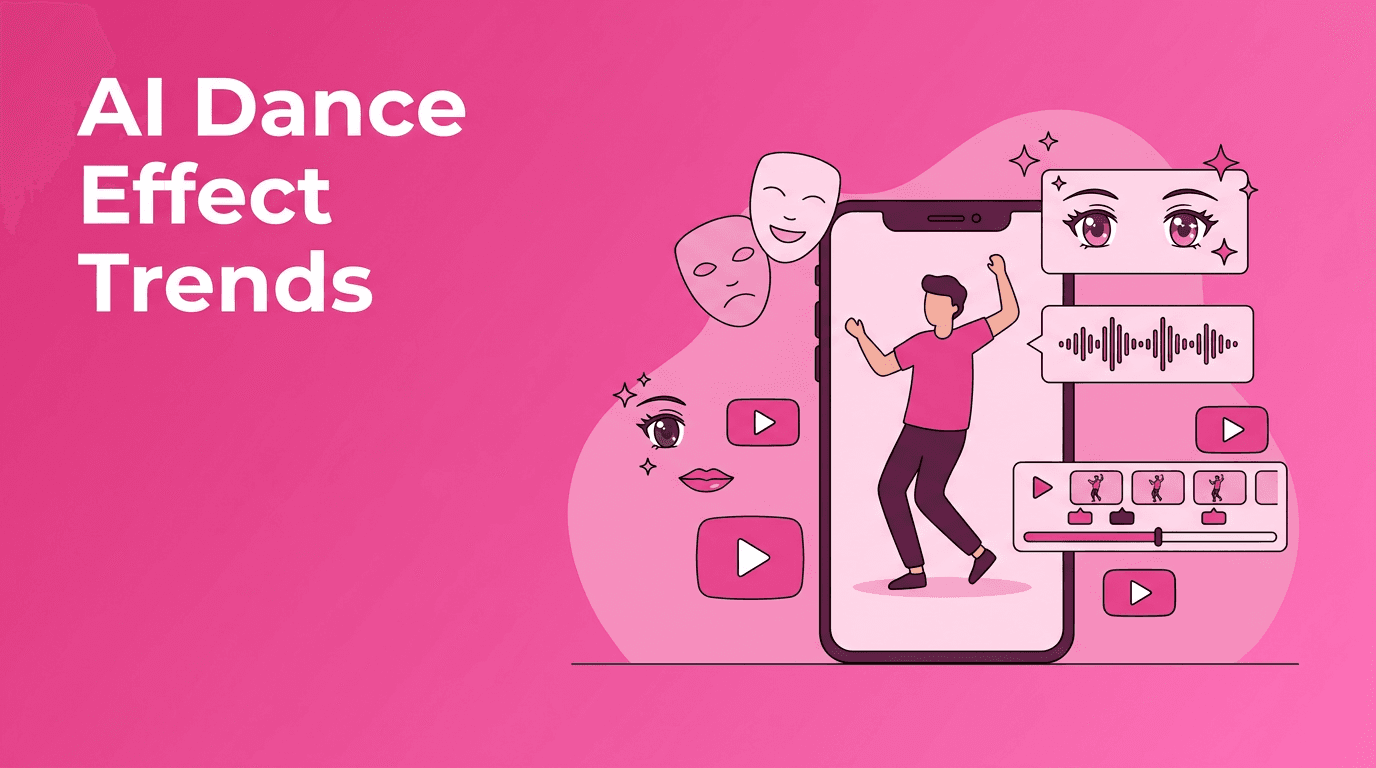
AI Dance Effect Trends Creators Can Use Right Now
AI dance effect content is exploding on TikTok and Reels. Here is how the latest filters work, which effects are trending, and how creators can use them to make scroll-stopping videos.

By Movi AI Team
Movi AI Editorial Team
If your For You Page suddenly looks like everyone is dancing harder, transforming faster, and switching styles mid-beat, you are not imagining it. The ai dance effect trend is one of the biggest drivers behind viral short-form content right now, and it sits at the center of a much bigger wave of AI video effects creators are using on TikTok and Instagram Reels.
From anime filter AI looks to AI face swap, AI beauty filter tools, lip sync upgrades, and wild style transfer edits, these effects are turning simple clips into high-retention content. In this guide, we will break down what is trending, how these effects work in plain English, and how to use them without making your videos feel gimmicky.
Why AI video effects are dominating short-form video
The biggest reason is simple: speed plus surprise. AI effects compress hours of editing into a few taps, and they create visual moments that make people stop scrolling. A creator can go from a selfie video to a polished dance avatar, a stylized anime scene, or a synced performance clip in far less time than a traditional workflow would take.
- AI effects create instant pattern breaks that boost watch time.
- They make solo creators look like full production teams.
- They are easy to remix, which helps trends spread faster.
- Many effects work especially well with TikTok and Instagram loop-friendly formats.
"The best AI effect is not the flashiest one. It is the one that makes people watch for one more second."
The latest trending AI effects creators are using
1. AI dance effect
The ai dance effect usually maps motion onto a person, avatar, or stylized body model. In simple terms, the model detects body joints like shoulders, elbows, hips, and knees, then recreates or enhances movement frame by frame. Some tools exaggerate movement, add choreography, or transform a still image into a dancing clip.
- Use a clear full-body shot for cleaner motion tracking.
- Pick audio with strong beats so motion changes feel intentional.
- Keep your background simple if the effect struggles with edges.
- For best results, start with short clips under 10 seconds and test multiple takes.
2. Anime filter AI
Anime filter AI remains huge because it gives creators a recognizable, highly shareable look. Technically, this effect uses facial landmark detection, segmentation, and style mapping to change skin texture, eyes, shading, and outlines. More advanced versions also apply the look consistently across moving frames, which reduces flicker.
- Use good front lighting so facial details stay sharp.
- Avoid heavy motion blur if you want stable frame-to-frame results.
- Match the filter to your content niche, cosplay, gaming, beauty, or storytelling all work well.
- Do a quick before-and-after reveal because transformation moments drive retention.
3. AI face swap
AI face swap tools are trending in comedy, fan edits, parody clips, and character transformations. These systems identify key facial points, align expressions and head angles, then blend a new face onto the source footage. The better tools also preserve lighting direction, skin tone balance, and mouth movement so the result feels more believable.
This is one of the most powerful and risky categories of tiktok ai effects, so creators should use it carefully. Always get consent when using another person's face, avoid misleading viewers, and never use face swap tools to impersonate someone in harmful or deceptive ways.
4. AI beauty filter
The modern AI beauty filter goes beyond smoothing skin. It often uses facial analysis to subtly adjust tone, sharpen eyes, clean flyaway hair, brighten under-eyes, and improve overall balance. The strongest creators use these tools lightly. Overdoing it can make content feel artificial and hurt trust with viewers.
- Aim for small enhancements, not total facial reconstruction.
- Check results on both the preview and final export.
- Use beauty filters as a polish layer after your main creative effect.
- If you promote skincare or makeup, be transparent about edited visuals.
5. Lip sync AI
Lip sync AI is growing fast because it can turn voiceovers, memes, music edits, and character clips into something much more dynamic. The tech analyzes phonemes, which are the basic sound units in speech, then matches mouth shapes to those sounds frame by frame. In advanced tools, head movement and facial expressions are adjusted too, making the performance feel more natural.
- Use clean audio with minimal background noise.
- Trim pauses before generating the effect for tighter sync.
- Pair lip sync with face swap or style transfer for stronger storytelling.
- Test meme audio, reaction clips, tutorials, and skits.
6. Style transfer and creative AI video filter looks
Style transfer is where a lot of the most eye-catching ai video filter trends are coming from. The model learns the visual features of a style, like brush textures, neon outlines, comic shading, claymation vibes, or cinematic grading, then applies that look across your footage. This category includes futuristic portraits, fantasy worlds, glitch edits, and painterly transformations.
These are some of the most flexible ai video editing effects because they can reshape the mood of a clip without changing the core action. That means you can repurpose one original video into multiple aesthetics for different audiences.
How these AI effects work, in simple terms
Most trending AI effects rely on a few core systems working together: detection, tracking, transformation, and rendering. Detection finds faces, bodies, backgrounds, or objects. Tracking follows them from frame to frame. Transformation changes appearance or motion using a trained AI model. Rendering blends everything together into a final video that looks smooth enough to post.
- Facial landmark detection maps eyes, nose, mouth, and jawline.
- Pose estimation tracks body motion for dance and movement effects.
- Segmentation separates the subject from the background.
- Generative models create new textures, styles, or facial outputs.
- Temporal consistency systems reduce flicker between frames.
How creators can use trending AI effects without looking generic
The secret is not using more effects. It is using them with a clear content idea. The most successful creators treat AI as a format enhancer, not the whole format. Instead of posting a random transformation, connect the effect to a joke, a reveal, a tutorial, a character arc, or a reaction.
- Start with a strong first second before the effect fully appears.
- Use text hooks like "wait for the transformation" or "which version wins?".
- Stack one hero effect with one support effect, for example ai dance effect + style transfer.
- Keep videos short enough to rewatch easily, usually 6 to 12 seconds for trend content.
- A/B test different thumbnails, audio, and opening frames.
Ready to test viral AI effects faster?
*Movi AI* gives creators an easy way to explore **AI video effects**, from stylized transformations to motion-driven edits, using text, images, or existing clips.
Download Movi AIA practical workflow for TikTok and Reels creators
- Pick one content goal: shock, humor, beauty, fandom, or storytelling.
- Choose one base clip with clean lighting and stable framing.
- Apply the main effect that supports the idea, not just the trend.
- Add captions because many viewers watch with sound off at first.
- Export, review for artifacts, and trim dead time before posting.
- Write a caption that invites comments, for example "anime version or real version?".
If you want an all-in-one option, *Movi AI* is especially useful because it supports text-to-video, image-to-video, video-to-video, and speech-to-video workflows. That makes it easier to test multiple trending ai effects without jumping between several apps.
Ethics, consent, and creator trust
Not every effect should be used the same way. AI face swap and beauty tools can cross lines if they are deceptive, manipulative, or used without permission. A good rule is simple: if an effect changes identity or appearance in a meaningful way, think about consent, transparency, and context before posting.
- Get permission before using someone else's face or likeness.
- Avoid misleading edits in news, politics, or sensitive topics.
- Disclose heavily altered visuals in brand or beauty content when needed.
- Use AI to entertain or enhance, not to deceive.
Final take: use AI effects with intent
The creators getting the best results from ai dance effect trends and other viral tools are not just chasing shiny visuals. They are combining technical effects with sharp hooks, clear concepts, and fast testing. If you can pair a trending look with a recognizable format, you have a much better chance of creating something people actually want to watch, save, and share.
Frequently Asked Questions
What is the best AI dance effect app for TikTok creators?
The best app depends on your workflow, but creators usually want strong motion tracking, easy exports, and multiple effect styles. Movi AI is a strong option if you want several AI video creation modes in one app.
How does anime filter AI work on videos?
Anime filter AI usually combines facial detection, segmentation, and style transfer to redraw features like eyes, shading, and outlines across each frame of a video.
Are AI face swap videos safe to post?
They can be safe if used responsibly, with consent and clear context. Avoid deceptive impersonation, harmful edits, or using someone else's likeness without permission.
What AI video effects are trending on TikTok right now?
Popular categories include AI dance effect clips, anime transformations, face swap edits, lip sync AI, beauty enhancement filters, and stylized video-to-video looks.
Movi AICreate stunning AI videos in seconds!
Turn your ideas into professional videos with the #1 AI video maker.
Download Movi AI