AI Film Preproduction Trends 2026: What Sora, Veo, and Kling Mean Right Now
AI film preproduction trends 2026 are reshaping how creators test scenes, pitch concepts, and prototype shots with Sora, Veo, Kling, and apps like Movi AI.
AI Film Preproduction Trends 2026: What Sora, Veo, and Kling Mean Right Now

By Movi AI Team
Movi AI Editorial Team
AI film preproduction trends 2026 are becoming one of the most practical shifts in visual creation right now. Instead of using models only for novelty clips, creators and teams are using tools from OpenAI, Google, Kuaishou, and apps like *Movi AI* to test scenes, pitch concepts, and build faster visual drafts before production starts.
Why preproduction is the most useful AI video battleground
The biggest change in the market is not just prettier clips. It is the move from experimental outputs to workflow utility. Sora, Veo, and Kling have pushed broader awareness of AI video technology, but much of the immediate business value is showing up in concept visualization, treatment development, animatics, social ideation, and shot planning.
- Studios can prototype scenes before spending on locations or sets
- Agencies can pitch campaign directions with moving references instead of static decks
- Creators can test multiple visual directions in hours, not days
- Small brands can create proof-of-concept video ideas without a full crew
Sora vs Veo vs Kling in the current market
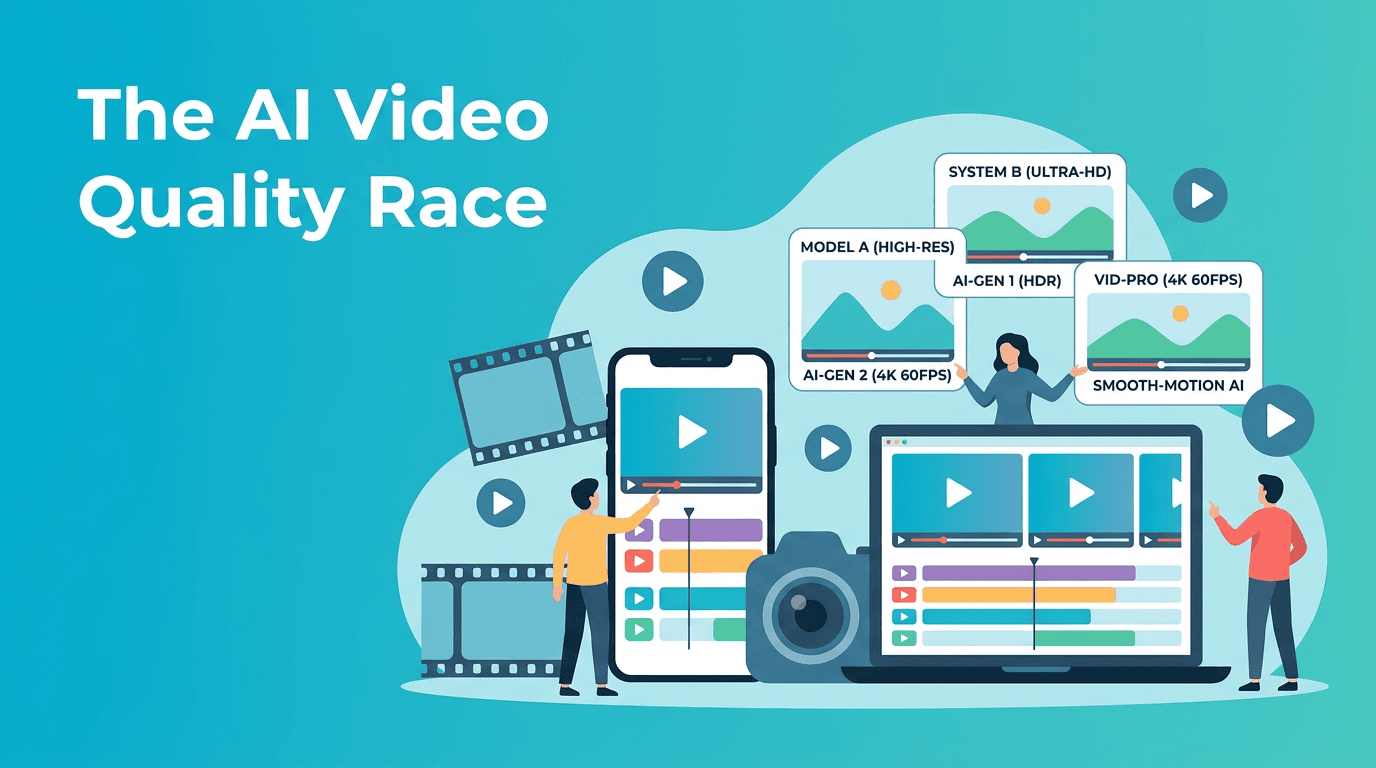
When people compare Sora vs other AI video systems, the discussion usually centers on realism. That matters, but professionals increasingly care about consistency, camera logic, prompt reliability, and controllability. Each leading model has helped raise expectations in different ways.
Sora
OpenAI's Sora raised the ceiling for cinematic motion, scene coherence, and physically plausible movement. It helped define the public conversation around the future of AI video by showing that generated clips could feel more like edited footage than abstract animation.
Veo
Google's Veo has attracted attention for strong visual quality, improved prompt following, and integration potential across a larger AI ecosystem. For professionals, that ecosystem angle matters because AI video increasingly lives inside broader content pipelines.
Kling
Kling gained traction quickly by demonstrating impressive motion and realism that made the competitive landscape more global. Its rise is one reason the AI video industry now moves faster than many analysts expected, with model updates, access changes, and quality jumps arriving in short cycles.
"The winners in AI video will not just generate impressive clips. They will reduce friction between idea, iteration, and publishing."
What is improving right now in AI generated video quality
A year ago, many outputs still broke under close inspection. Today, AI generated video quality is improving across five practical dimensions: subject consistency, camera motion, environmental detail, text prompt fidelity, and stylistic control. While no platform is perfect, the progress is meaningful enough that more teams are moving from testing to real usage.
- Consistency - characters and objects hold shape better across frames
- Motion - pans, dolly-like moves, and action timing feel less chaotic
- Prompt accuracy - models are getting better at matching requested scenes
- Editing potential - outputs are easier to cut into ads, teasers, and concepts
- Speed to draft - creators can explore multiple concepts in one sitting
Research firms and platform trackers continue to report strong enterprise interest in generative media. Market forecasts differ widely, but most agree that spending on AI-assisted creative tools is rising quickly, especially in advertising, e-commerce, entertainment development, and social media production.
New use cases beyond hype clips
The most durable trend is the shift from novelty to repeatable use cases. This is where AI film preproduction trends 2026 become more than a headline. Teams are choosing targeted workflows where the technology saves time even if it does not replace full production.
- Pitch visuals for film, TV, and branded content
- Social concept testing for product launches
- Music visual prototypes for independent artists
- Mood reels for fashion, beauty, and luxury campaigns
- Game world teasers and environmental concept motion
- Internal concept communication for distributed teams
How creators and brands should respond
For creators, the smart move is to treat these tools as an iteration engine. Use high-end models to study visual direction and use accessible mobile tools like *Movi AI* to turn prompts, stills, or existing footage into fast publishable content. For brands, the opportunity is not replacing every shoot. It is reducing the number of expensive unknowns before production begins.
Start testing concepts faster with Movi AI
Use *Movi AI* to turn text prompts, images, and footage into polished short-form visuals for ideation, pitching, and publishing.
Download Movi AIPredictions for the next phase
Looking ahead, the future of AI video will likely be defined less by one breakout demo and more by control layers. Expect better scene editing, identity consistency, style locking, timeline-aware generation, multimodal prompting, and more direct connections between video models and editing apps. The best AI video generator 2026 may not be the flashiest model. It may be the one that fits cleanly into real creator workflows.
- Model quality gaps will narrow faster than workflow gaps
- Hybrid production will outperform fully synthetic production in most commercial contexts
- Mobile creation apps will become major entry points for AI-assisted video making
- Rights management and provenance features will become selling points
- Short-form social content will remain the fastest adoption lane
Frequently Asked Questions
What are the biggest AI video trends in 2026?
The biggest trends are better consistency, stronger prompt control, hybrid production workflows, and wider use in preproduction, marketing, and social content.
How does Sora compare to other AI video models?
Sora is known for cinematic coherence, while competitors like Veo and Kling have pushed realism, speed of iteration, and market competition forward.
What is the best AI video generator in 2026?
The best option depends on your goal. High-end models lead in realism, while tools like Movi AI make AI-powered creation faster and more practical for everyday content.
Is AI generated video quality good enough for professional use?
In many concepting, pitching, and short-form content workflows, yes. For high-stakes production, most teams still combine AI outputs with human editing and traditional footage.
Movi AICreate stunning AI videos in seconds!
Turn your ideas into professional videos with the #1 AI video maker.
Download Movi AI