AI Video Effects That Are Blowing Up on TikTok and Reels
AI video effects are changing how creators make viral TikToks and Instagram Reels. From anime filter AI to lip sync and face swap tools, here is how the latest trends work and how to use them well.

By Movi AI Team
Movi AI Editorial Team
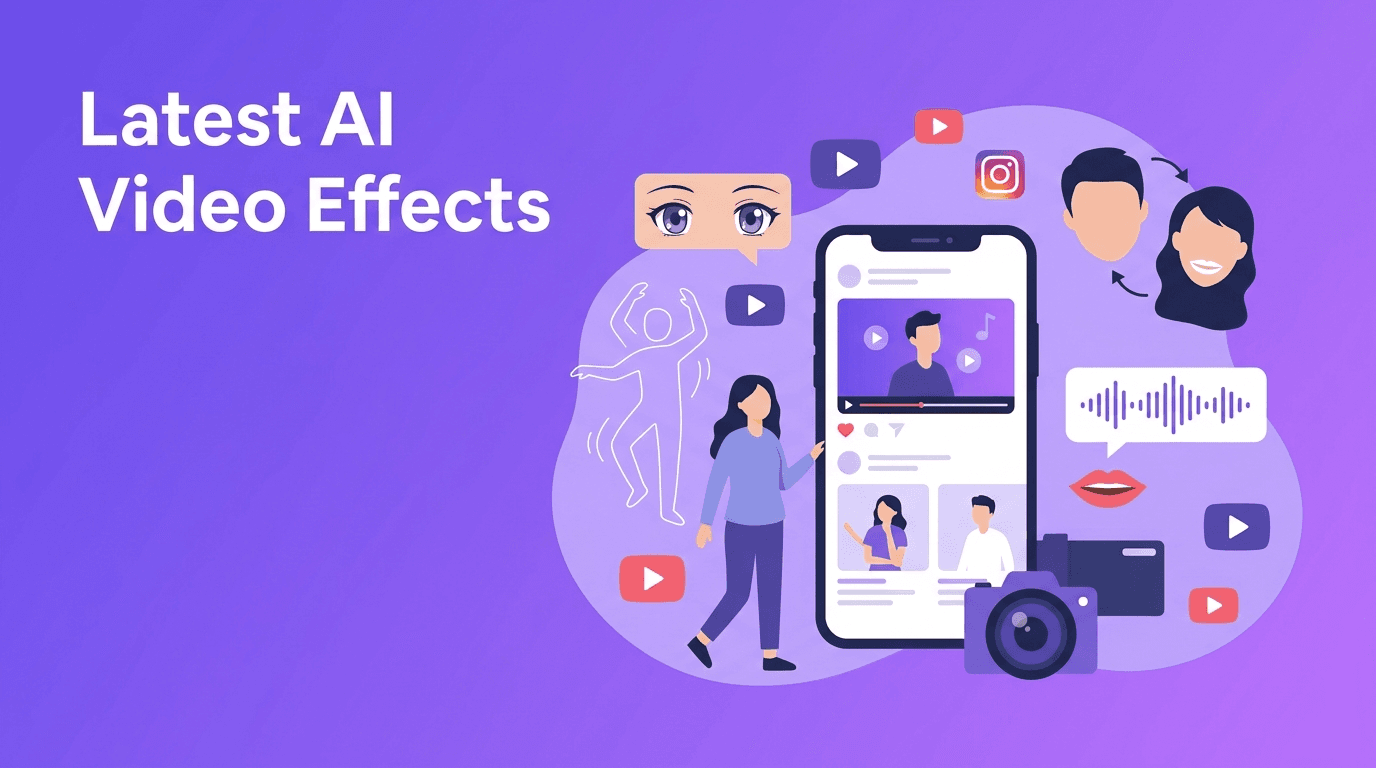
AI video effects are everywhere right now, and if you scroll TikTok or Instagram Reels for even five minutes, you will see creators using them to stop thumbs instantly. From anime filter AI looks to ai dance effect clips and realistic ai face swap edits, these tools are turning simple videos into viral content fast. In this guide, you will learn what is trending, how these effects work in simple terms, and how to use them without making your videos feel generic.
Why AI video effects spread so fast
Short-form platforms reward content that gets attention in the first second. That is why trending ai effects perform so well. They create surprise, transformation, or motion right away. A face changes style, a still photo starts dancing, lips match audio perfectly, or a casual selfie turns into a polished cinematic clip. These moments are highly watchable, and watchability often leads to better retention, more shares, and more saves.
- Transformation hooks grab attention instantly
- Familiar formats make trends easy to copy and remix
- High novelty helps creators stand out without expensive gear
- Fast production lets you test more ideas in less time
Anime filter AI and stylized character effects
One of the most popular ai video filter categories is the anime look. Creators use it for glow-ups, cosplay transitions, music edits, gaming content, and profile videos. The appeal is simple, people love seeing ordinary footage transformed into something that feels illustrated, cinematic, or fantasy-inspired.
How anime filter AI works
In simple terms, anime filter ai tools analyze faces, edges, hair, skin, and background details, then redraw those elements in a stylized way. Under the hood, many systems use image segmentation, facial landmark detection, and generative models to preserve key features while changing texture, shading, and line work. Better tools also keep the look consistent frame to frame so the effect does not flicker.
Tips for better results
- Use clear front-facing lighting so facial features are easy to detect
- Keep the background clean or simple to avoid messy outlines
- Choose clips with steady movement for more consistent stylization
- Match the anime look with music, captions, and transitions that fit the vibe
AI dance effect and motion-driven clips
The ai dance effect trend is huge because it mixes humor, surprise, and shareability. You have probably seen static portraits dancing, avatars moving to trending audio, or creators swapping their own movement style into fantasy or animated scenes. These edits work because motion feels alive, even when the source material is simple.
How AI dance effects work
Most dance effects rely on pose estimation. The AI tracks body joints like shoulders, elbows, hips, and knees across frames, then transfers that motion to another image, avatar, or generated character. Some tools also use motion synthesis to fill in missing movement naturally. That is why a still image can appear to dance, or why your movement can be mapped onto a completely different visual style.
How to make AI dance videos feel less repetitive
- Pick audio with a strong beat change for a more dramatic payoff
- Start with a still frame or serious pose, then reveal the dance
- Use short clips, usually 5 to 10 seconds, for stronger loop potential
- Add a caption setup so viewers understand the joke or transformation
AI face swap and identity-based effects
AI face swap remains one of the most searched and shared effect categories, but it is also the one that needs the most care. Creators use it for comedy, fan edits, character roleplay, and cinematic remixes. When done well, it feels seamless. When done poorly, it looks uncanny and can hurt trust.
The tech behind face swap
Face swap systems typically detect facial landmarks, align the target face to the source face, then blend texture, lighting, and expression using generative models. Advanced tools account for head angle, blinking, mouth shape, and shadows. The goal is not just to paste a face on top, but to preserve identity while matching motion and lighting naturally.
"The best AI effect is not the flashiest one. It is the one that supports the story in the first three seconds."
Ethics creators should not ignore
- Always get clear consent before using someone else's face
- Avoid misleading edits that could be mistaken for real footage
- Do not use face swap content for harassment, impersonation, or deception
- Label experimental or fictional content when context could be unclear
AI beauty filter and polished camera-ready edits
The modern ai beauty filter is more than skin smoothing. It can refine lighting, balance facial symmetry, brighten eyes, reduce blemishes, and subtly enhance details while keeping a more natural look than older filters. This is why beauty AI is popular for talking-head content, tutorials, fashion clips, and brand videos.
How beauty enhancement AI works
Beauty enhancement models identify facial regions separately, such as skin, eyes, lips, and jawline. Then they apply targeted adjustments instead of one heavy blur across the whole face. Smarter tools preserve texture and avoid the plastic look by combining detection models with enhancement networks trained on portrait data.
Best practice for creators
- Keep enhancements subtle so your content still looks real
- Check the result on different screen sizes before posting
- Use beauty AI as a support tool, not a replacement for good lighting
- Be careful with over-editing if your niche values authenticity
Lip sync AI, style transfer, and other trending AI effects
Some of the most effective tiktok ai effects are not the loudest ones. Lip sync AI is exploding for skits, music memes, character edits, and multilingual content. Style transfer is also growing, especially for creators who want a signature look across multiple posts. Together, these tools are shaping the next wave of ai video editing effects.
How lip sync AI works
Lip sync systems analyze speech audio into phonemes, which are the small sound units in language. The model then predicts matching mouth shapes and facial motion for each frame. Better systems also adjust cheeks, jaw movement, and timing so the speech feels believable rather than robotic.
What style transfer does
Style transfer applies the visual characteristics of one image or aesthetic to another clip. That could mean turning normal footage into painterly scenes, comic-book visuals, retro film looks, or futuristic textures. Technically, the AI separates content from style, then recombines them while trying to keep motion stable.
- Use lip sync AI for reaction skits, voiceover memes, and character roleplay
- Try style transfer to build a consistent visual brand across your feed
- Test background replacement, motion trails, and text-to-video effects for fresh hooks
- Combine one hero effect with simple editing, because too many layers can reduce clarity
Want all these effects in one workflow?
*Movi AI* gives creators a powerful effects library for **ai video effects**, including text-to-video, image-to-video, video-to-video, and speech-driven creation tools so you can test viral ideas faster.
Download Movi AIHow to pick the right AI effect for your content niche
Not every trend fits every audience. A beauty creator might get better results from an ai beauty filter, while a meme page may win with ai face swap or lip sync AI. Gaming creators often benefit from anime filter AI or fantasy style transfer. The key is choosing an effect that amplifies your content idea instead of replacing it.
- For fashion and beauty, use enhancement and cinematic style effects
- For comedy, test face swap, lip sync, and exaggerated character filters
- For music content, use dance effects, beat-synced transitions, and anime visuals
- For brand content, focus on polished effects that improve clarity and consistency
A simple workflow for viral testing
If you want better results with ai video effects, stop posting one polished idea and hoping it works. Instead, test several versions of the same concept. Change the hook, the effect, the caption, or the audio. AI makes iteration faster, which is one of its biggest advantages for creators.
- Create 3 hook variations for the same video idea
- Apply one main effect per version
- Keep the first 1 to 2 seconds visually strong
- Post, compare retention, and double down on the top performer
Frequently Asked Questions
What are the most popular ai video effects right now?
The biggest trends include anime filter ai, ai dance effect, ai face swap, ai beauty filter, lip sync AI, and style transfer effects for TikTok and Instagram Reels.
How do ai video filters work?
Most ai video filters use computer vision to detect faces, body movement, objects, and backgrounds, then apply generative models or enhancement systems to transform each frame consistently.
Are ai face swap videos safe to post?
They can be safe if you use them responsibly, get consent, and avoid deceptive or harmful edits. Transparency matters, especially when realism is high.
What is the best way to use ai video effects on TikTok?
Start with a strong hook, use one clear effect, match it to trending audio, and keep the video short enough to encourage replays and shares.
Can I create trending ai effects videos with Movi AI?
Yes. Movi AI helps creators make videos from text, images, existing footage, or speech, making it easier to experiment with trending AI styles and viral short-form formats.
Movi AICreate stunning AI videos in seconds!
Turn your ideas into professional videos with the #1 AI video maker.
Download Movi AI