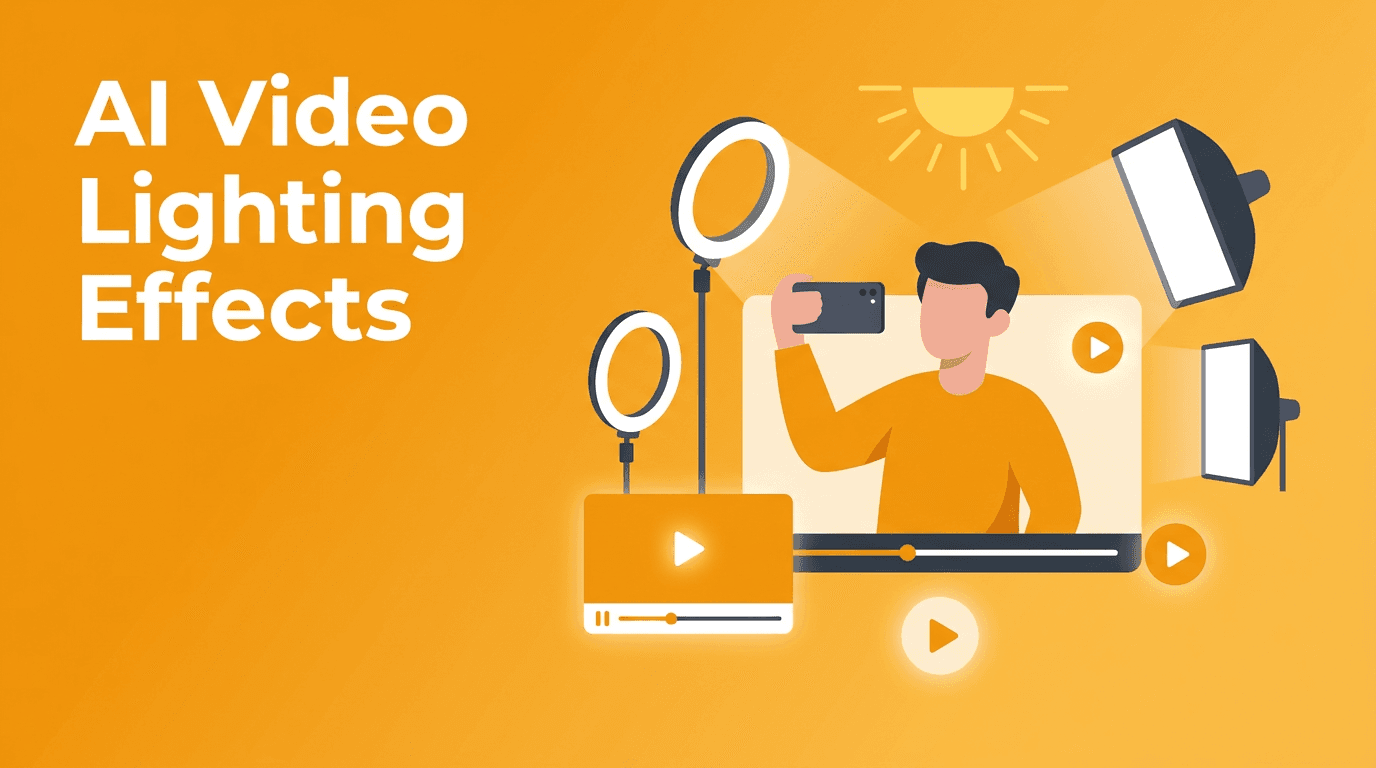
AI Video Lighting Effects for Selfie Reels: The Fastest Way to Fake Golden Hour
AI video lighting effects can make basic selfie clips feel cinematic in seconds. Learn what works on TikTok and Reels, how the tech works, and how creators can use lighting-driven edits to stop the scroll.

By Movi AI Team
Movi AI Editorial Team
AI video lighting effects are quietly becoming one of the smartest ways to upgrade selfie content without buying more gear. For TikTok and Reels creators, better light often matters more than expensive cameras, and AI can now simulate glow, shadow direction, and mood in a few taps.
Why lighting edits are trending right now
Most viral short videos are judged in the first second. If your face looks flat, dim, or uneven, viewers scroll. Lighting-focused AI edits stand out because they make everyday clips feel more polished, more intentional, and more cinematic without a full reshoot.
- Golden hour simulation adds warmth and depth to basic window-light footage.
- Studio relighting creates a cleaner creator look for beauty, fashion, and talking-head content.
- Mood lighting helps storytime clips, mini vlogs, and dramatic edits feel more emotional.
- Face-aware light shaping keeps the subject readable while backgrounds stay stylish.
How AI video lighting effects work
At a simple level, the model estimates the structure of a face or scene, then predicts how new light would fall across it. That means the AI is not just slapping a filter on top. It is interpreting highlights, shadows, skin areas, edges, and depth cues so the new lighting feels more believable.
The technical idea in plain English
- Face and subject detection identifies where the person is in the frame.
- Depth estimation guesses which parts of the image are closer or farther away.
- Relighting simulation adjusts brightness, contrast, shadow rolloff, and highlight placement.
- Color mapping shifts the scene toward warm sunset tones, cool studio tones, or dramatic low-key looks.
- Temporal consistency helps the light stay stable from frame to frame as you move.
"Creators do not always need more equipment. Sometimes they just need better light, faster."
What kinds of videos benefit most
This trend works especially well for creators who film quickly on a phone. If your workflow depends on speed, AI video lighting effects can rescue clips that would otherwise feel too dull to post.
- Selfie monologues that need cleaner face lighting
- GRWM and beauty videos that need flattering skin and eye light
- Fashion try-on clips where lighting affects fabric texture
- Mini vlogs shot in mixed indoor lighting
- Late-night reactions that need a more intentional look
Want better-looking videos without a studio?
Use *Movi AI* to turn simple clips, photos, or prompts into polished AI-generated videos with cinematic results built for short-form platforms.
Download Movi AIA practical workflow for creators
1. Start with the cleanest clip you have
Even strong AI works better when the original shot is usable. Keep your face visible, avoid harsh backlight if possible, and stabilize your phone enough that the effect has less motion to correct.
2. Pick one lighting goal
Do not stack random looks. Choose a single outcome, like golden hour, soft studio glow, or dramatic side light. Short-form content performs better when the visual intent is obvious.
3. Match lighting to content type
- Warm light for lifestyle, beauty, dating, and cozy vlog content
- Clean neutral light for tutorials and product explainers
- High-contrast dramatic light for storytelling, suspense, or music-related clips
4. Keep skin believable
If highlights are too strong or skin looks plastic, the effect feels fake. Dial the look back slightly. On TikTok and Instagram, subtle polish often beats obvious processing.
Common mistakes that hurt performance
- Using heavy relighting on already overexposed clips
- Changing light direction so aggressively that it breaks realism
- Over-warming skin until it looks orange
- Pairing cinematic light with messy framing and expecting a premium result
- Ignoring how lighting affects the mood of the audio and caption
Why Movi AI fits this workflow
*Movi AI* helps creators build polished visual content from text prompts, images, and existing videos. That makes it useful not only for upgrading recorded clips, but also for generating new short-form concepts when you want a stronger visual hook from the start.
You can use it to test different moods, create stylized scenes, and move faster from idea to publishable video, especially when your content calendar does not leave room for perfect shooting conditions.
Frequently Asked Questions
What are AI video lighting effects?
They are AI-powered relighting tools that change how light appears in a video, often simulating studio light, sunset glow, or dramatic mood lighting.
Can AI fix bad lighting in a video?
It can improve many clips, especially selfies and talking-head videos, but extremely dark or overexposed footage still has limits.
Are lighting effects better than regular video filters?
Often, yes. Regular filters mostly change color, while AI relighting tries to reshape highlights and shadows based on the subject.
How do I make my TikTok videos look more cinematic with AI?
Start with a clear subject, choose one lighting style, keep the effect subtle, and pair it with clean framing and strong pacing.
Movi AICreate stunning AI videos in seconds!
Turn your ideas into professional videos with the #1 AI video maker.
Download Movi AI