Video Benchmarking for Social Teams: A Data-Driven Playbook to Improve Platform Performance
Video benchmarking helps brands compare content performance across platforms, spot weak points, and build a smarter production system that lifts views, engagement, and conversions.

By Movi AI Team
Movi AI Editorial Team
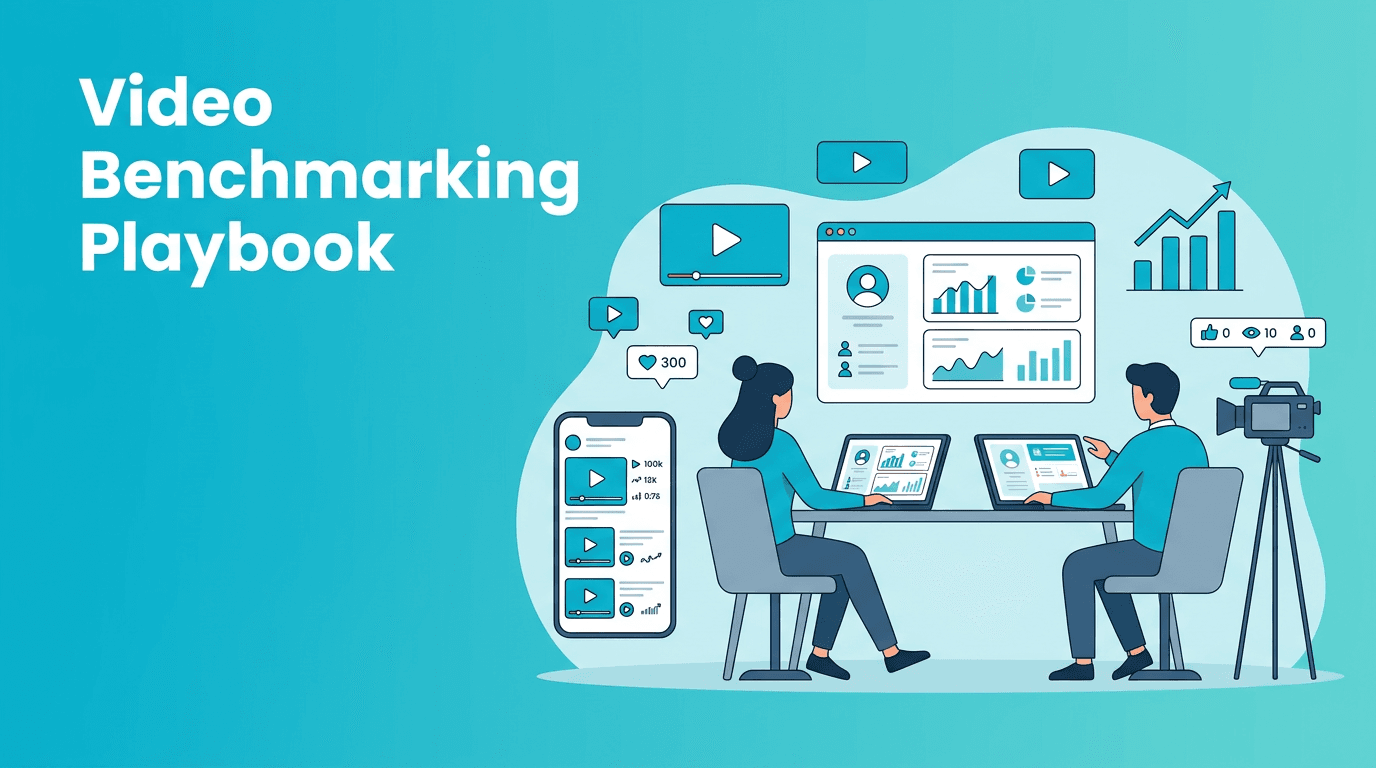
Video benchmarking gives marketing teams a practical way to stop guessing and start improving. Instead of chasing every trend, brands can compare formats, platforms, and creative patterns to see what actually drives views, engagement, and conversions.
Why video benchmarking matters now
Short-form platforms reward consistency, fast learning, and creative iteration. That means teams need a reliable system for measuring what good performance looks like on TikTok, Instagram Reels, YouTube Shorts, and paid social. Video benchmarking helps you set realistic targets, identify underperforming assets, and prioritize content with the strongest return.
- Use benchmarks to compare watch time, completion rate, saves, shares, clicks, and conversions across platforms.
- Separate organic metrics from paid metrics so your analysis stays clean.
- Track performance by format, topic, hook type, length, and call to action.
- Review benchmark shifts monthly because platform behavior changes fast.
Build a benchmark framework your team can actually use
Start with four comparison layers
The most useful benchmark systems are simple enough to repeat every week. Create a spreadsheet or dashboard that compares performance at four levels: platform, content type, campaign goal, and creative variable. This structure makes video benchmarking more actionable than a generic report.
- Platform: TikTok, Reels, Shorts, LinkedIn, Facebook
- Content type: product demo, testimonial, tutorial, behind-the-scenes, founder video
- Goal: reach, engagement, clicks, leads, purchases
- Creative variable: first-second hook, caption style, on-screen text, audio choice, video length
"What gets measured consistently gets improved creatively."
Which metrics deserve the most attention
Not every metric should carry equal weight. A high-view video may still be weak if it produces low intent. For most brands, the best reporting model balances attention metrics and business metrics.
- Attention metrics: 3-second views, average watch time, completion rate, replay rate
- Engagement metrics: likes, comments, shares, saves, profile visits
- Conversion metrics: click-through rate, landing page views, add-to-cart rate, lead submissions, purchases
- Efficiency metrics: production time, cost per asset, cost per conversion, asset reuse rate
Use benchmark bands instead of one magic number
Rather than forcing a single target, define three bands for each KPI: below baseline, on target, and outperforming. This gives teams a better way to evaluate results across different audiences and content categories.
How platform behavior changes your benchmarks
Each platform distributes video differently. TikTok often rewards fast pattern interruption and rewatchability. Instagram Reels tends to favor shareable, identity-driven content. YouTube Shorts benefits from strong topic clarity and viewer satisfaction signals. Your benchmarks should reflect those differences instead of applying one standard everywhere.
- For TikTok, watch time and rewatches often reveal whether the hook and pacing are strong enough.
- For Instagram Reels, saves, shares, and profile actions can indicate stronger downstream value.
- For YouTube Shorts, retention and topic match are critical because the system learns from viewer response quickly.
- For paid social, focus more heavily on click-through rate, hold rate, and conversion efficiency.
Scale testing without slowing down
Need more creative variations for benchmarking? *Movi AI* helps you turn prompts, images, and existing footage into more video concepts faster, so your team can test hooks, lengths, and formats at scale.
Download Movi AIA weekly workflow for better video benchmarking
Teams often fail at reporting because the process is too complex. A weekly cadence keeps your insights fresh and your production focused.
- Monday: review last week's winners and losers by platform
- Tuesday: identify two to three creative variables to test
- Wednesday: produce new variants using internal footage or AI-generated assets
- Thursday: publish and monitor early signals
- Friday: log results, update benchmarks, and document takeaways
Tie benchmarks to content decisions
Benchmark reports should lead directly to action. If videos under 20 seconds consistently outperform on one platform, update your briefs. If founder-led clips generate more qualified traffic, shift production resources. Strong video benchmarking is not just measurement, it is a content operating system.
How AI improves benchmark-driven video production
AI video tools are changing how fast marketers can respond to data. Instead of waiting days for edits, teams can generate multiple versions from text prompts, adapt a concept for different platforms, and repurpose top-performing assets into fresh tests. This lowers production bottlenecks and improves ROI.
- Create multiple hook variations from one idea
- Turn static images into motion assets for faster testing
- Rework existing videos into platform-specific versions
- Produce more content without scaling headcount at the same rate
Final takeaway
The brands that win with short-form video do not just publish more. They learn faster. With a clear video benchmarking system, your team can make better creative decisions, report value more confidently, and scale production with less waste.
Frequently Asked Questions
What is video benchmarking in social media marketing?
Video benchmarking is the process of comparing your video performance against internal baselines or industry targets to improve future content decisions.
Which metrics are most important for benchmarking short videos?
The most useful metrics usually include watch time, completion rate, shares, saves, click-through rate, and conversions, depending on your goal.
How often should marketers update video benchmarks?
Most teams should review and update benchmarks monthly, while checking early performance signals weekly for faster optimization.
Can AI tools help with video benchmarking?
Yes. AI tools help teams create more test variations quickly, which makes it easier to compare hooks, lengths, formats, and messaging at scale.
Movi AICreate stunning AI videos in seconds!
Turn your ideas into professional videos with the #1 AI video maker.
Download Movi AI