Prompt-to-Motion Guide: AI Prompt Video for Beginners
Learn how AI prompt video tools turn written ideas into moving scenes. This beginner-friendly guide covers models, prompts, settings, and practical ways to create better videos fast.

By Movi AI Team
Movi AI Editorial Team
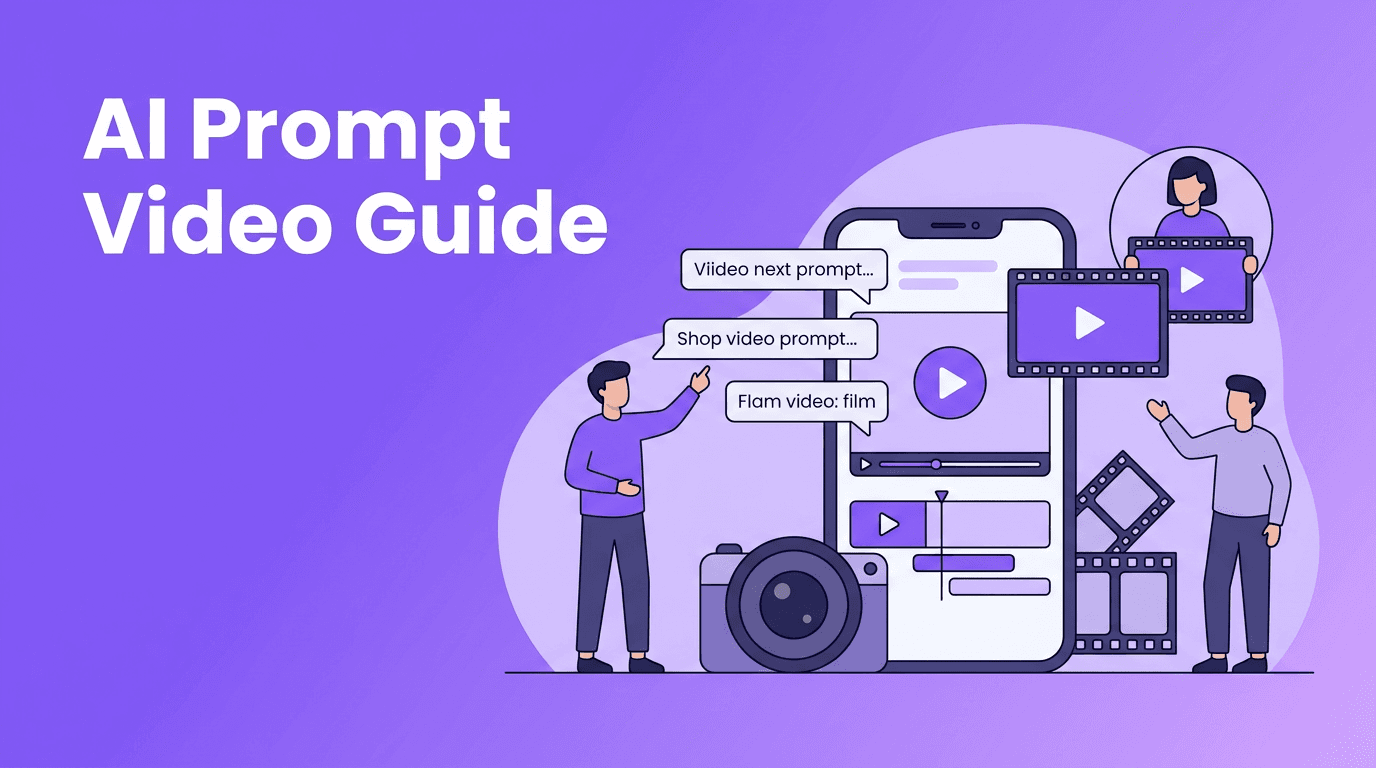
AI prompt video tools make it possible to turn written descriptions into short visual scenes without filming from scratch. If you are new to AI video, this guide explains how the technology works, how to write better prompts, and how to get more reliable results with a user-friendly app like *Movi AI*.
What is AI prompt video?
An AI prompt video workflow starts with text. You describe a subject, action, camera angle, setting, mood, and style, and the model generates moving visuals that match your instructions as closely as possible. This helps creators, marketers, and small teams produce concept videos, social clips, explainers, and ad ideas much faster.
- Input: a written prompt, and sometimes a reference image or existing clip
- Processing: the model interprets objects, motion, scene layout, and style cues
- Output: a short video sequence that can be refined with new prompts or edits
How models convert language into motion
At a high level, text-guided video systems connect a language understanding component with a visual generation component. The language side maps your prompt into concepts such as subject, background, action, and style. The generation side then predicts frames and motion over time. The challenge is not only making a good-looking single image, but also keeping temporal consistency so people, objects, and lighting stay believable from frame to frame.
Diffusion-based approaches
Diffusion models usually begin with visual noise and gradually denoise it into a coherent video according to the prompt. They are strong at rich detail and stylized output. In video generation, diffusion methods often work across both spatial detail and time, helping preserve motion continuity. They can produce impressive visuals, but they may require stronger prompts and careful settings to avoid flicker or drifting details.
Transformer-based approaches
Transformer-based models process sequences very effectively, which makes them a natural fit for language and time-based media. In video systems, transformers can model relationships between frames, motion patterns, and prompt tokens. This can improve how actions unfold over time. Some newer systems also combine transformers with diffusion components, blending strong prompt understanding with high-quality frame generation.
"The best AI videos usually come from clear thinking first, and clear prompts second."
Prompt engineering tips for better results
If you want stronger output, think like a director. Good prompts reduce ambiguity. Instead of asking for everything at once, specify the core scene first, then add motion, camera behavior, and style. This is one of the fastest ways to improve AI prompt video quality.
Use this simple prompt formula
- Subject: who or what is in the scene
- Action: what is happening
- Setting: where it happens
- Camera: close-up, wide shot, tracking shot, overhead
- Style: realistic, cinematic, anime, 3D, sketch
- Lighting and mood: soft morning light, dramatic shadows, energetic vibe
- Length and format: 5 seconds, vertical 9:16, social-ready
Good vs bad prompt examples
- Bad: 'make a cool city video'
- Better: 'A woman in a yellow raincoat walks through a busy neon city street at night, reflections on wet pavement, slow tracking shot, cinematic realism, 6 seconds, vertical 9:16'
- Bad: 'dog running in park'
- Better: 'A golden retriever runs toward the camera through a sunny park, grass moving in the wind, shallow depth of field, handheld feel, natural colors, 5 seconds, horizontal 16:9'
Notice how the better prompts define subject, action, environment, camera movement, style, and duration. That extra structure helps the model make fewer guesses.
Settings that matter
- Aspect ratio: use 9:16 for Reels, Shorts, and TikTok, 16:9 for YouTube and websites, 1:1 for some social ads
- Video length: shorter clips are often easier to control, especially for beginners
- Style keywords: terms like cinematic, documentary, anime, 3D render, or product ad can shape output strongly
- Quality settings: higher quality may improve detail, but it can also increase generation time
- Reference inputs: adding an image or source video can improve consistency when available
Why different models interpret the same prompt differently
Not every model sees language the same way. One model may respond strongly to visual adjectives like 'foggy' or 'minimalist', while another pays more attention to actions such as 'jumping' or 'turning toward camera'. Training data, architecture, motion handling, and safety filters all influence the final clip. That is why testing small prompt variations is essential.
For example, one model might treat 'cinematic' as dramatic lighting and shallow depth of field, while another interprets it as slower camera motion and film-like framing. With *Movi AI*, beginners can explore these differences more easily through a simple creation workflow for text-based video generation.
Try a simpler way to make AI videos
Use *Movi AI* to turn text, images, or existing footage into polished AI-generated videos without a complicated workflow.
Download Movi AIPractical uses for AI prompt video
- Social media hooks for TikTok, Reels, and Shorts
- Product teasers for e-commerce launches
- Podcast promo clips from episode ideas or quotes
- Mood boards and concept videos for creative planning
- Educational visuals that explain abstract topics quickly
- Ad testing to compare several concepts before full production
A smart workflow is to generate several short scenes, pick the strongest moments, and then edit them into one final piece. This makes AI prompt video useful not just for final output, but also for brainstorming and rapid testing.
A beginner workflow you can use today
- Start with a single clear scene instead of a whole story
- Choose the right aspect ratio for your platform
- Keep the first generation to 4 to 6 seconds
- Add one style keyword and one camera direction
- Review the result and change only one variable at a time
- Upscale, extend, or remix the best version instead of restarting completely
Frequently Asked Questions
How do I write a good prompt for AI video?
Start with subject, action, setting, camera, and style. Clear, specific prompts usually produce more consistent results than short vague requests.
What is the difference between diffusion and transformer video models?
Diffusion models generate visuals by refining noise into frames, while transformer-based systems are strong at understanding sequences and relationships over time. Many modern tools combine both ideas.
What video aspect ratio should I use for social media?
Use 9:16 for most vertical platforms like TikTok, Reels, and Shorts. Use 16:9 for YouTube and website embeds.
Can beginners make videos from prompts on a phone?
Yes. Mobile apps like Movi AI make it easier to create videos from text prompts without complex editing software.
Movi AICreate stunning AI videos in seconds!
Turn your ideas into professional videos with the #1 AI video maker.
Download Movi AI