AI Video Trends 2026: What Is Changing Right Now
AI video trends 2026 are already taking shape through faster models, better consistency, and wider creator adoption. Here is what is happening now, what platforms like Sora, Veo, and Kling signal, and how to prepare.

By Movi AI Team
Movi AI Editorial Team
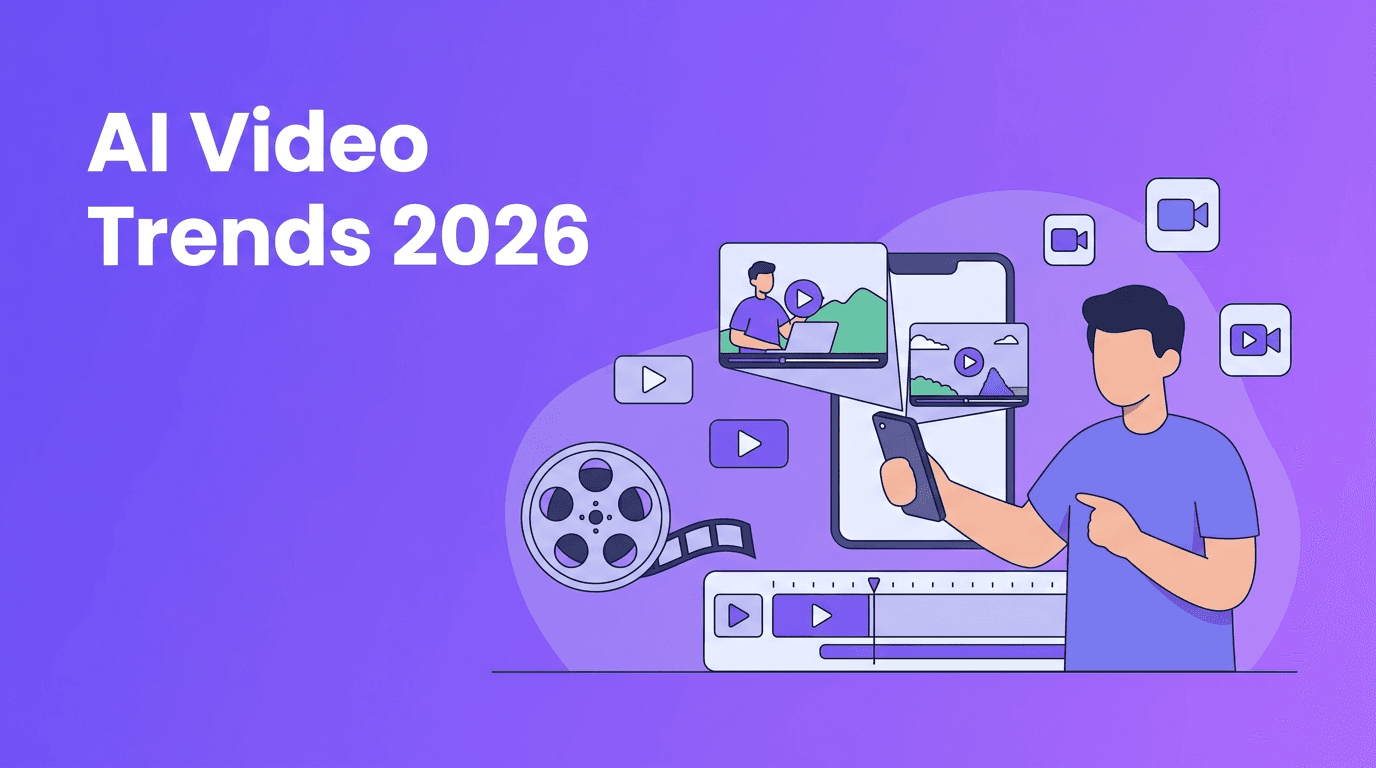
AI video trends 2026 are becoming visible much earlier than many expected. In the past year, the market has shifted from short, glitchy clips to more coherent generated scenes, stronger motion control, and tools that fit real creator workflows. If you are tracking the future of AI video, the biggest story right now is not just model hype, it is the move from experiments to repeatable production.
What is happening now in AI video
The current wave of ai video technology is defined by three changes: better realism, better consistency across frames, and better usability. Flagship model announcements such as OpenAI's Sora, Google's Veo, and Kling have pushed expectations higher by showing longer clips, more natural physics, and stronger prompt adherence. At the same time, mobile-first tools and creator apps are making AI video generation more accessible for everyday production, not just research demos.
- Quality is improving fast - lighting, motion, and scene composition look more cinematic than they did a year ago.
- Consistency is becoming a key benchmark - users now expect characters, camera movement, and style to remain stable across shots.
- Input options are expanding - text, images, existing video, and voice are all becoming usable starting points.
- Speed matters more than novelty - creators want fast iteration for social content, ads, explainers, and product videos.
- Distribution is mainstream - AI-generated clips are now appearing across TikTok, YouTube Shorts, Instagram Reels, ads, and internal business content.
Sora, Veo, Kling, and the race for model leadership
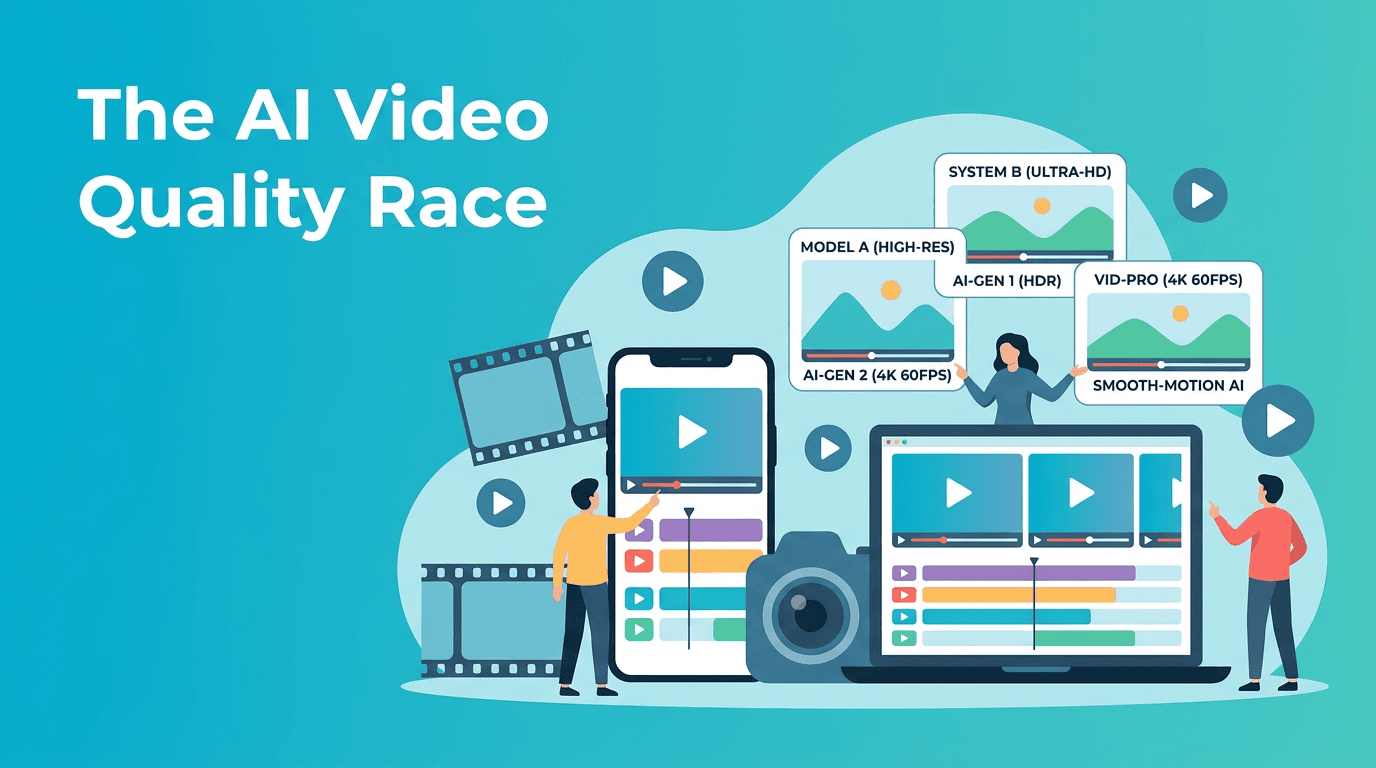
Any honest look at ai video news has to start with the model race. Sora raised the bar by showcasing detailed world simulation and cinematic prompt interpretation. Veo has drawn attention for high-quality output and integration potential within Google's broader creative ecosystem. Kling gained momentum because its examples suggested strong motion realism and visual polish, especially in action-heavy scenes. The practical takeaway is that sora vs other ai video is no longer just a branding question, it is about workflow fit, reliability, and access.
How the top models differ
- Sora is associated with impressive scene understanding, complex motion, and strong cinematic imagination.
- Veo stands out for creators watching Google's ecosystem, especially where video generation may connect with editing, cloud, and media workflows.
- Kling has earned attention for realism and dynamic movement, making it one of the most discussed names in recent ai video industry conversations.
- App-based generators like *Movi AI* matter because they turn advanced generation into practical creation flows for text-to-video, image-to-video, video-to-video, and speech-to-video.
"The winners in AI video will not be the models that look amazing once. They will be the tools that creators can trust every day."
Why ai generated video quality is improving
The rise in ai generated video quality comes from advances in data, training methods, and multimodal understanding. Newer systems are better at connecting prompt language with camera motion, object permanence, and natural transitions. That means fewer broken limbs, less flicker, and more believable movement. While no model is perfect, the quality gap between demo-era generators and production-ready tools is clearly narrowing.
The biggest quality gains to watch
- Temporal consistency - objects and people stay more stable from frame to frame.
- Prompt fidelity - outputs follow text instructions more accurately.
- Physics and motion - walking, turning, and environmental movement look less artificial.
- Style control - creators can better maintain a visual identity across multiple clips.
- Editing readiness - clips are increasingly usable as parts of larger projects, not just standalone experiments.
For creators and brands, this shift changes tool evaluation. The best ai video generator 2026 will not be defined only by visual wow factor. It will be judged on consistency, controllability, output speed, editing compatibility, and whether it can support repeatable content pipelines.
Industry adoption is moving from testing to budgets
The ai video industry is maturing because adoption is no longer limited to hobbyists. Marketing teams are using AI clips for product teasers, social ads, and explainers. Media teams are testing AI-assisted previsualization. Small businesses are using AI to produce more video without agency-level budgets. Across the broader AI market, enterprise adoption continues to rise, and video is increasingly part of that spend because demand for short-form content keeps growing.
- Brands use AI video for rapid campaign variations and localized creative.
- Agencies use it for moodboards, concept testing, and faster client pitches.
- Creators use it to publish more often without scaling production costs linearly.
- Educators and trainers use it for visual lessons, onboarding, and scenario-based content.
- E-commerce teams use it for product showcases and seasonal promos.
How the creator economy is changing
For solo creators, the future of AI video is deeply tied to leverage. One person can now brainstorm, script, generate visuals, add voice, and publish across multiple channels with a fraction of the old production overhead. This does not eliminate creativity. It raises the value of concept development, taste, editing judgment, and brand consistency. In other words, AI lowers the cost of making video, but it increases the value of having a strong point of view.
Turn trends into publishable videos
Use *Movi AI* to turn prompts, images, voice, or existing clips into polished AI videos faster. Test ideas quickly and keep up with the latest AI video workflows.
Download Movi AIWhere AI video is headed next
Looking ahead, ai video trends 2026 point toward more controllable, more editable, and more personalized generation. The next phase will likely combine generation with precise editing tools, persistent characters, scene continuity, and stronger brand controls. Instead of prompting one clip at a time, creators will increasingly build entire campaigns and story sequences with AI-native workflows.
Predictions for the next wave
- Longer narrative coherence will improve, making multi-shot storytelling more practical.
- Character consistency will become a competitive must-have across serious platforms.
- Multimodal creation will expand, letting users move fluidly between script, voice, image, and video inputs.
- Mobile creation will grow fast as high-end generation becomes more app-friendly.
- Commercial use controls such as watermarking, licensing clarity, and safety systems will become more standardized.
- AI-assisted editing will matter as much as generation, especially for creators producing at scale.
This is also where platforms like *Movi AI* fit into the broader landscape. While frontier models capture headlines, creator adoption often happens through tools that simplify the workflow. The gap between research breakthroughs and everyday content creation is where product design matters most.
How to stay ahead of AI video trends 2026
- Test multiple tools instead of committing too early to one model ecosystem.
- Track quality over hype by reviewing consistency, controllability, and turnaround time.
- Build reusable prompts and styles for your niche, brand, or client work.
- Use AI for iteration first - concept testing and variation generation often deliver the fastest ROI.
- Watch platform updates closely because model improvements are arriving faster than traditional software release cycles.
The current moment in ai video trends 2026 is exciting because the category is transitioning from novelty to infrastructure. Better models like Sora, Veo, and Kling are pushing quality higher, but the larger shift is that AI video is becoming a practical layer in everyday creation. For creators, marketers, and early adopters, the opportunity now is to learn the workflows before the rest of the market catches up.
Frequently Asked Questions
What are the biggest AI video trends in 2026?
The biggest trends include higher video realism, better temporal consistency, multimodal inputs, stronger editing controls, and wider adoption by creators and brands.
How does Sora compare to other AI video tools?
Sora is known for advanced scene simulation and cinematic output, but other platforms like Veo, Kling, and creator-focused apps may be better depending on access, speed, and workflow needs.
What is the best AI video generator 2026 for creators?
The best tool depends on your goals. Creators should compare output quality, consistency, speed, ease of use, and whether the platform supports text, image, voice, or video inputs.
Is AI-generated video quality good enough for professional use?
In many cases, yes. AI-generated video quality has improved enough for ads, social clips, concept visuals, explainers, and internal business content, though review and editing are still important.
What is the future of AI video for the creator economy?
AI video will let creators produce more content with smaller teams, making strategy, storytelling, editing, and brand identity even more valuable competitive advantages.
Movi AICreate stunning AI videos in seconds!
Turn your ideas into professional videos with the #1 AI video maker.
Download Movi AI