AI Video World Models: What Sora, Veo, and Kling Change for Creators Now
AI video world models are reshaping how creators plan, generate, and scale content. Here is what Sora, Veo, and Kling reveal about quality, consistency, adoption, and what happens next.

By Movi AI Team
Movi AI Editorial Team
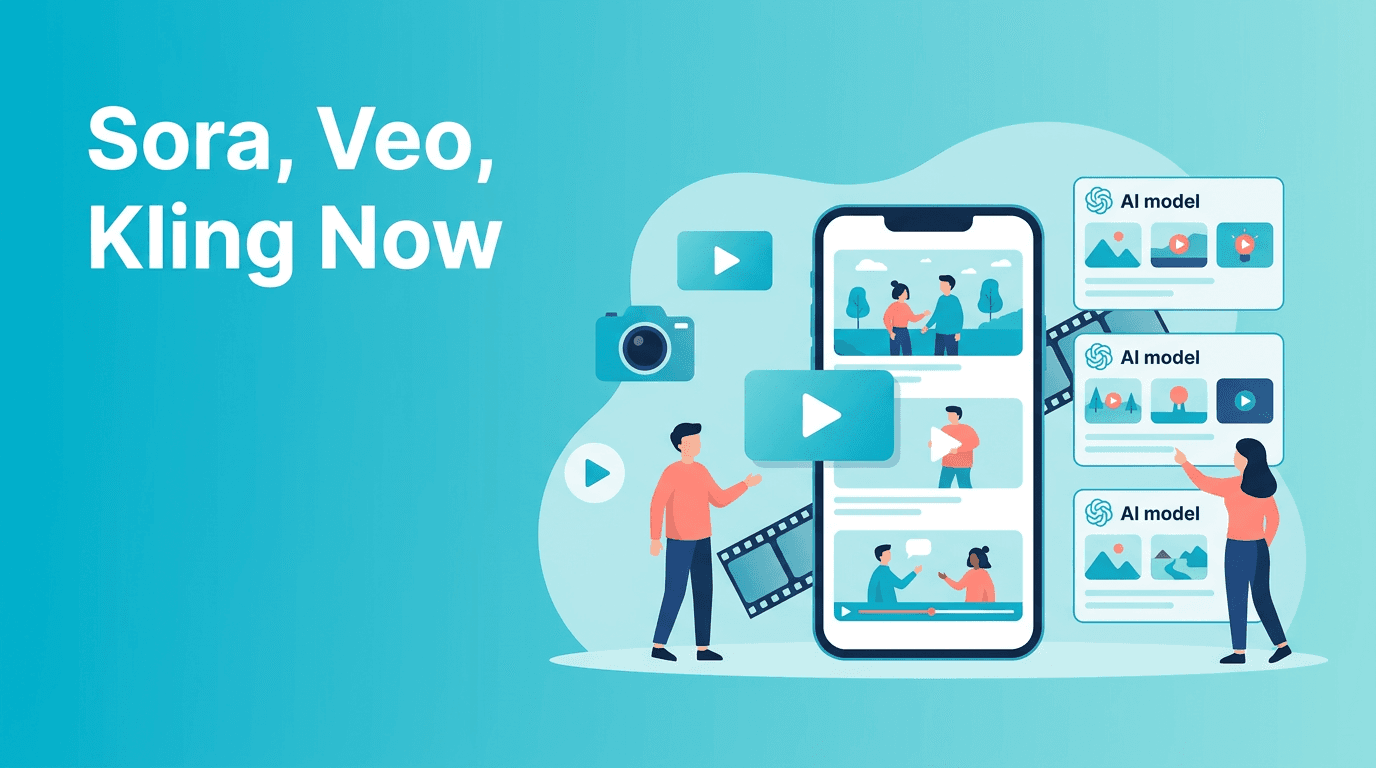
AI video world models are becoming the clearest way to understand what is happening in generative video right now. Instead of treating clips as isolated motion outputs, newer systems are getting better at simulating space, physics, camera behavior, and object persistence across shots. That shift explains why tools such as Sora, Veo, and Kling matter far beyond headline demos.
Why AI video world models matter in 2026 conversations
The phrase AI video world models is gaining traction because it points to a deeper technical change in AI video technology. Earlier systems often produced impressive but fragile clips, with drifting faces, inconsistent objects, and motion that broke under closer inspection. The newest generation is moving toward stronger temporal coherence, more believable interactions, and scenes that feel authored instead of merely animated.
- Sora pushed mainstream attention toward longer, more cinematic scene generation.
- Veo highlighted prompt understanding, editing controls, and integration with broader creator workflows.
- Kling gained attention for strong motion aesthetics and social media friendly output quality.
- Across the market, vendors are racing to improve ai generated video quality, control, and consistency rather than novelty alone.
Sora vs Veo vs Kling: what the latest model race actually shows
The popular debate around Sora vs other AI video platforms often focuses on raw visual wow factor. That matters, but creators should judge these systems on four practical dimensions: consistency, controllability, editing flexibility, and production fit. In other words, the best model is not always the one with the most dramatic demo. It is the one that survives repeated use in real workflows.
1. Quality is improving, but consistency is the real battleground
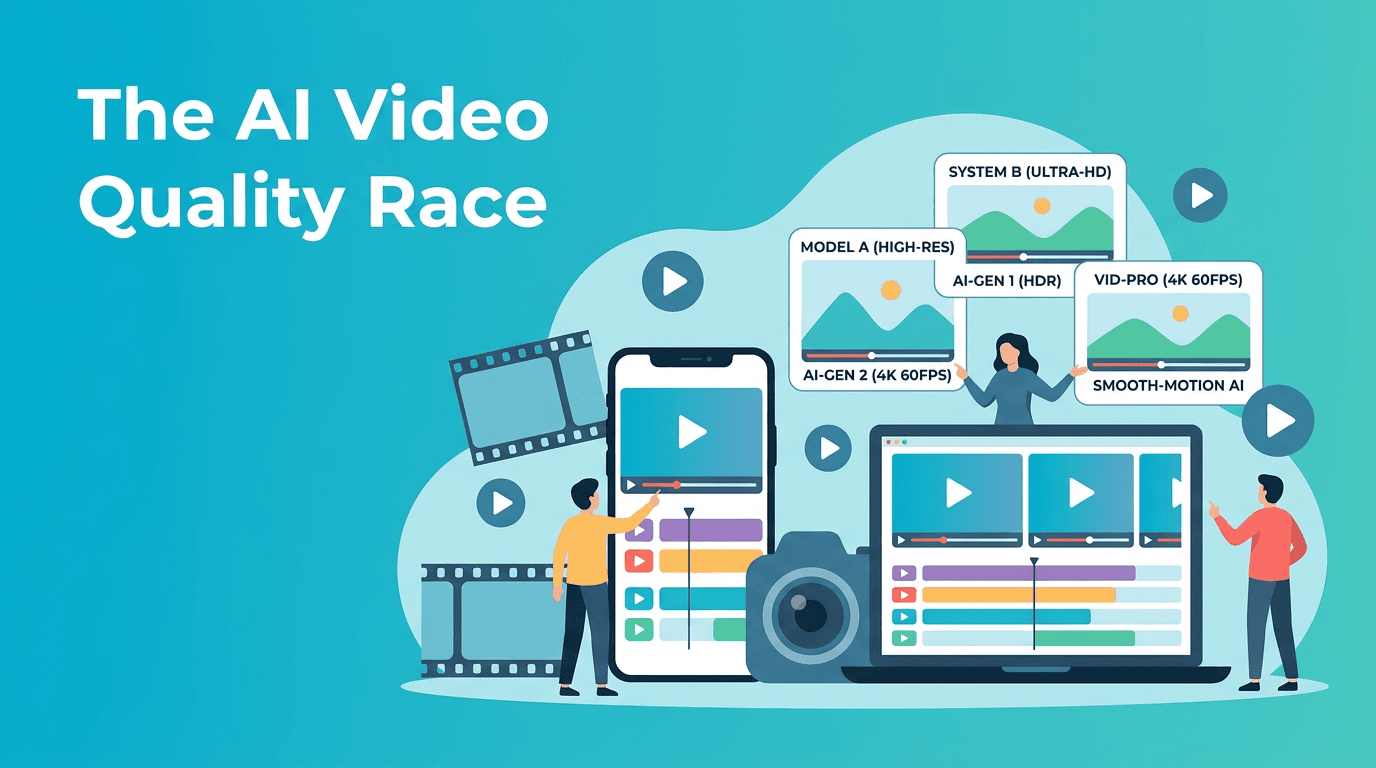
One of the biggest shifts in recent AI video news is that model quality is no longer judged by a single beautiful clip. Teams now evaluate whether a generated subject stays recognizable, whether motion logic remains stable, and whether multiple outputs can form a coherent campaign. This is where many breakthroughs are happening now. Object permanence, better scene geometry, and more reliable camera movement are becoming the new benchmarks.
2. Control layers are becoming as important as generation
In the current AI video industry, creators increasingly want tools that support image references, style references, motion guidance, re-edits, and shot variations. Pure prompt-only generation is becoming less central. The winning platforms are evolving into creative systems, not just clip machines. That is also where apps like *Movi AI* fit well, because real users often need fast workflows from text, images, speech, or existing video, not only one-shot prompting.
"The future of generative video will not be won by spectacle alone. It will be won by reliable creative control."
What is happening now in the AI video industry
The current market is moving from experimentation to selective deployment. Media teams, agencies, ecommerce brands, app marketers, and solo creators are using AI video for concept tests, social clips, animated ads, explainers, product visuals, and multilingual campaign variations. Industry analysts broadly agree that generative AI adoption across business functions accelerated through 2024 and 2025, and video is now moving into the same pattern: early hype, workflow integration, then budget normalization.
- Marketing teams use AI video for rapid ad iteration and creative testing.
- Content creators use it to scale Shorts, Reels, and channel trailers without full production crews.
- Small businesses use it to create promo assets that were previously too expensive.
- Studios and enterprise teams are testing previsualization, pitch development, and synthetic scene generation rather than replacing full productions outright.
That is an important reality check for anyone tracking the future of AI video. Full replacement of traditional production is not what is happening now. Hybrid production is. AI is strongest where speed, iteration, personalization, and cost efficiency matter most.
The creator economy impact is getting bigger
For creators, the biggest development is not only lower production cost. It is compressed time to publish. When an individual creator can turn an idea into multiple testable video concepts in minutes, audience feedback becomes part of the production loop. That changes how trends are chased, how hooks are tested, and how niche channels compete with larger teams.
- Creators can test multiple visual concepts before committing to a final direction.
- Short-form publishers can build series formats faster with reusable prompts and references.
- Brands can localize campaigns with more versions for different audiences.
- Agencies can pitch with moving concepts instead of static mockups.
This is also why searches around the best AI video generator 2026 keep growing. Users are not only looking for impressive output. They are looking for a tool that helps them move from idea to publishable asset with fewer bottlenecks. Mobile-first creation, simple control inputs, and fast regeneration cycles are becoming major competitive advantages.
Want a faster way to make AI videos?
Try *Movi AI* to create videos from prompts, images, speech, or existing footage. It is a practical way to turn today’s AI video advances into publishable content.
Download Movi AIWhat to watch next: near-term predictions for AI video world models
Better shot continuity across scenes
A major next step for AI video world models is maintaining character identity, wardrobe, objects, and lighting logic across multiple shots. Single-clip generation is no longer enough. The next wave will be about scene chains that feel like edited sequences, not isolated outputs.
More editing, less one-shot prompting
Expect the market to shift toward controllable timelines, inpainting for motion, reference locking, and conversational revisions. The best AI video generator 2026 will likely behave more like a collaborative editor than a black-box generator.
Audio and video creation will merge
Speech-driven scenes, lip-sync improvements, sound effects, and native music alignment will become standard. This is especially relevant for apps like *Movi AI*, where multimodal creation already reflects where the market is heading: one interface, multiple inputs, faster publishing.
Synthetic production will become platform-specific
Expect AI video outputs to be optimized by destination, with separate generation logic for TikTok, Reels, Shorts, product pages, app store previews, and ads. That platform awareness will be a key layer in AI video technology over the next year.
How creators should respond right now
- Track consistency before judging any model by a single demo clip.
- Build repeatable workflows using prompts, references, and regeneration notes.
- Choose tools that support practical inputs such as images, speech, and existing video.
- Use AI for testing and scaling first, then expand into higher stakes production.
- Follow model releases closely, but prioritize tools that fit your publishing rhythm.
The biggest mistake in reading today's AI video news is assuming the market is settled. It is not. We are still in the phase where model capabilities are moving fast, product interfaces are differentiating, and user expectations are rising every quarter. The creators and teams that win will be the ones who learn workflows, not just model names.
Frequently Asked Questions
What are AI video world models?
AI video world models are systems designed to generate video with stronger understanding of motion, space, objects, and scene continuity. They aim to make outputs look more coherent and believable over time.
How does Sora compare with Veo and Kling?
Sora, Veo, and Kling each stand out in different areas such as cinematic quality, prompt understanding, controllability, and social-ready motion. The best choice depends on your workflow and output needs.
Is AI generated video quality good enough for professional use?
For many marketing, social, and concepting tasks, yes. For high-end narrative or brand-critical work, most teams still use AI in a hybrid workflow with human review and editing.
What is the future of AI video for creators?
Creators will likely get better continuity, more editing control, stronger audio integration, and faster multi-format publishing. The tools will become more workflow-driven and less demo-driven.
Movi AICreate stunning AI videos in seconds!
Turn your ideas into professional videos with the #1 AI video maker.
Download Movi AI