Future of AI Video: What Is Happening Now and What Comes Next
The future of AI video is unfolding fast, with Sora, Veo, Kling, and other models pushing quality, consistency, and creator workflows forward right now.

By Movi AI Team
Movi AI Editorial Team
The future of AI video is no longer a distant concept. It is unfolding right now as new models like Sora, Veo, and Kling push AI video technology toward better motion, stronger scene coherence, and more usable creator workflows.
Why the future of AI video feels different in 2026
The biggest shift is that AI video is moving from short experimental clips to more reliable production assets. Over the last year, model announcements from OpenAI, Google, and major Chinese labs have signaled a clear race around realism, prompt control, physics simulation, and editing consistency. For creators and brands, that means the conversation has shifted from 'Can AI make video?' to 'Which workflow is good enough for real publishing?'
- Quality is improving with better lighting, motion, and camera behavior.
- Consistency is improving across characters, objects, and scene transitions.
- Control is improving through image references, style guidance, and structured prompting.
- Speed is improving as mobile apps and creator tools turn raw generations into publishable assets faster.
New models driving AI video news right now
Sora and cinematic world simulation
OpenAI's Sora helped redefine expectations for the future of AI video by showcasing longer, more cinematic clips with stronger environmental detail and camera movement. Its significance is not just visual polish. It pushed the market toward the idea that AI models should understand how scenes evolve over time, not just generate a sequence of attractive frames.
Veo and prompt understanding at scale
Google's Veo has drawn attention for prompt fidelity, cinematic outputs, and integration potential across the broader Google ecosystem. In the Sora vs other AI video debate, Veo stands out for how it may connect generative video with search, ads, creator tools, and multimodal AI assistants. That platform advantage matters as much as raw clip quality.
Kling and the competitive global market
Kling has become one of the most watched entrants in AI video news because it demonstrated impressive motion realism and scene continuity early enough to reshape competitive expectations. Its momentum also highlights a broader trend in the AI video industry: innovation is coming from multiple regions, and competition is accelerating model progress for everyone.
"The winners in AI video will not just generate impressive clips. They will make creativity faster, more controllable, and easier to publish."
AI generated video quality is improving in specific ways
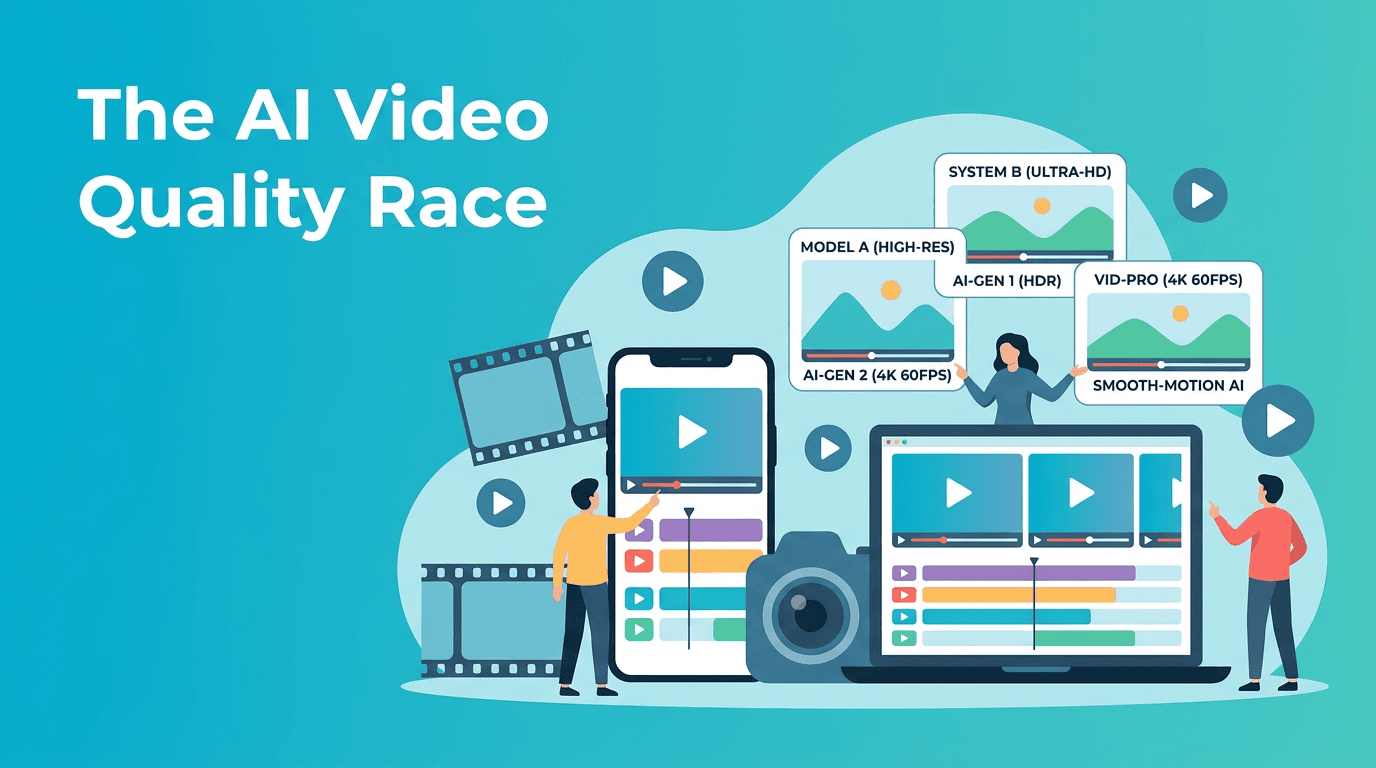
When people discuss AI generated video quality, they often focus on realism alone. But creators care about a broader set of improvements that affect whether a clip is usable. Current systems are getting better at temporal consistency, believable motion paths, camera transitions, and maintaining style across shots.
- Temporal consistency: fewer sudden changes in faces, objects, and backgrounds between frames.
- Motion logic: better handling of walking, turning, hair movement, and environmental reactions.
- Prompt adherence: more accurate interpretation of actions, settings, lens language, and pacing.
- Editing potential: generated footage is becoming easier to combine with voiceover, captions, music, and product shots.
- Commercial usability: short clips are increasingly good enough for ads, social posts, explainers, and concept trailers.
Where the AI video industry is seeing adoption first
The AI video industry is not adopting every use case equally. Fast-turnaround formats are seeing the earliest traction because they value speed and iteration over perfection. Marketing teams, social media managers, app developers, and solo creators are among the earliest practical adopters.
- Performance marketing: multiple ad variations for testing hooks, offers, and formats.
- Social content: short videos for Reels, Shorts, TikTok, and product launches.
- Storyboards and previsualization: agencies and studios testing concepts before production.
- Education and training: explainer clips, onboarding visuals, and process walkthroughs.
- E-commerce: product demos, lifestyle loops, and AI-assisted creative testing.
Create faster with Movi AI
Turn ideas, images, or existing footage into polished AI-powered videos from your phone. *Movi AI* helps creators test concepts and publish faster.
Download Movi AIHow the creator economy is changing
For independent creators, the future of AI video is about leverage. One person can now concept, generate, edit, narrate, and publish more content in less time. That changes output volume, but it also changes the type of content creators can attempt. Visual experiments, niche storytelling, speculative trailers, faceless channels, and multilingual content are all becoming easier to produce.
The economic impact is already visible in broader creator tooling trends. Generative AI adoption across marketing and creative teams has risen sharply over the past two years, and video is following the same curve as image and copy tools, though with higher quality thresholds. The likely result is a larger market for creative direction, prompt design, editing judgment, and brand storytelling, even as raw production becomes more automated.
What to watch next in AI video technology
- Longer clip duration with fewer breakdowns in scene logic.
- Character persistence across multiple shots and episodes.
- Better audio integration between speech, sound effects, and visuals.
- Editable generation where creators can change one element without remaking the whole clip.
- Mobile-first workflows that let creators go from prompt to publish inside a single app.
- Rights and provenance tools that help platforms identify synthetic media and manage trust.
Predictions for the future of AI video
Over the next 12 to 24 months, expect the market to move from model demos to workflow competition. The best AI video generator 2026 conversation will be less about who has the flashiest sample and more about who offers the best balance of quality, speed, control, editing, and commercial reliability. That is where creator apps and integrated platforms will have an advantage.
- Prediction 1: AI video becomes a standard layer inside creative apps, not a standalone novelty.
- Prediction 2: Brands will use AI video for testing and iteration before full-scale shoots.
- Prediction 3: Social platforms will reward fast, niche, high-volume visual storytelling enabled by AI.
- Prediction 4: Human creators who combine taste, strategy, and AI speed will outperform creators who rely on generation alone.
- Prediction 5: Trust, watermarking, and disclosure standards will become a bigger part of product design and regulation.
Where Movi AI fits in
As the market evolves, many users will not need a research lab interface. They will need a practical mobile workflow. That is where *Movi AI* fits into the future of AI video. With support for creating videos from text prompts, images, speech, and existing clips, it gives creators a fast path from concept to publishable content without requiring a full production stack.
Frequently Asked Questions
What is the future of AI video?
The future of AI video points toward better realism, stronger consistency, longer clips, and easier editing workflows. The biggest shift is from experimental demos to practical creator and business use.
How does Sora compare with Veo and Kling?
Sora is known for cinematic world simulation, Veo for strong prompt understanding and ecosystem potential, and Kling for impressive motion realism and competitive momentum. Each model is pushing the market in slightly different ways.
What industries are adopting AI video first?
Marketing, social media, e-commerce, education, and creative agencies are among the earliest adopters. These sectors benefit most from rapid iteration and lower production costs.
Is AI generated video quality good enough for commercial use?
In many short-form cases, yes. AI generated video quality is increasingly strong enough for social ads, product content, explainers, and concept visuals, especially when paired with editing and human review.
Movi AICreate stunning AI videos in seconds!
Turn your ideas into professional videos with the #1 AI video maker.
Download Movi AI