Text Prompt Video Lab: How Prompt Precision Improves AI Motion Results
Learn how text prompt video workflows turn written ideas into motion, with practical prompt tips, model basics, and better ways to guide AI results.

By Movi AI Team
Movi AI Editorial Team
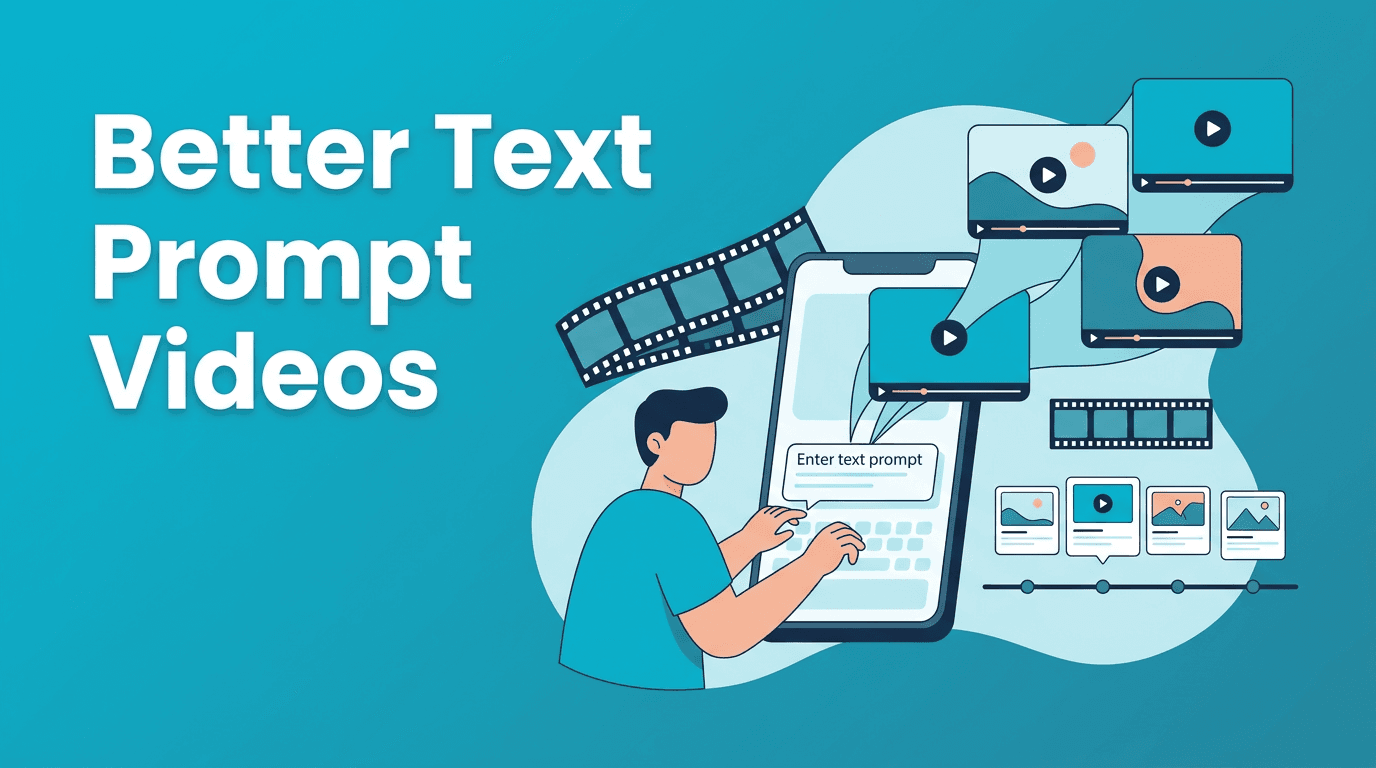
A text prompt video workflow turns a short written description into moving visuals. For beginners, the biggest improvement often comes from better prompt structure, not more editing. If you want more control over AI-made clips, learning how to describe subject, action, camera, style, and timing is the fastest way to improve results.
Why prompt precision matters
Many people expect AI to read vague ideas and output a perfect clip. In practice, most models respond better when your request is specific, visual, and ordered. A strong prompt reduces random motion, keeps scenes more consistent, and helps the model prioritize what matters most.
- Start with the main subject first
- Describe the action clearly
- Add the environment or setting
- Include camera movement only if needed
- Finish with style and quality cues
Bad prompt vs good prompt
Bad: 'A cool city video.' This is too vague and gives the model very little structure. Good: 'A young cyclist rides through a rainy neon city street at night, reflections on the pavement, slow tracking shot, cinematic lighting, realistic motion, 9:16 vertical video.' The second version tells the model what to show, how it moves, and what format to use.
A simple formula for better text prompt video results
Use this repeatable formula: subject + action + setting + camera + style + format. This keeps your prompt readable while covering the most important visual decisions.
- Subject: a baker, a dog, a sneaker, a robot
- Action: mixing dough, running, rotating on a pedestal, opening a door
- Setting: in a cozy kitchen, on a beach, inside a studio
- Camera: close-up, overhead shot, slow pan, handheld feel
- Style: realistic, anime, sketch, cinematic, minimal
- Format: 16:9 for YouTube, 9:16 for Reels, 1:1 for feeds
Better AI video starts with better visual instructions.
How AI models interpret prompts differently
Not every model reads language the same way. Some are stronger at photorealism, others at stylized motion, and others at understanding longer scene descriptions. This is why the same prompt can produce different results across apps and models.
Diffusion-based systems
Diffusion-based approaches generate frames by gradually refining noise into images and motion. They can create beautiful texture and style, but may need more prompt tuning to maintain scene consistency across time.
Transformer-based systems
Transformer-based approaches are often better at handling sequence relationships and longer prompt context. In simple terms, they can be stronger at understanding what should happen next, which can improve temporal coherence in motion-heavy scenes.
For everyday creators, the key takeaway is simple: test the same text prompt video idea in more than one model when possible. If one output feels stiff or inconsistent, another model may interpret your action and camera instructions more naturally.
Prompt tips for cleaner motion
- Use one main action per short clip
- Avoid stacking too many subjects in one prompt
- Ask for simple camera movement before trying complex shots
- Mention consistent style if you want a unified look
- State the aspect ratio in the prompt to match your platform
- Keep clip length short when testing new ideas
Style keywords that often help
Useful style terms include cinematic, realistic, documentary, anime, stop motion, product ad, and soft lighting. Use only a few. Too many style keywords can confuse the model and cause mixed results.
Practical uses for creators and marketers
A text prompt video workflow is useful for concept trailers, social clips, mood pieces, product teasers, story ideas, and quick visual experiments. It is especially helpful when you need draft visuals fast without filming from scratch.
- Content creators can test hooks for short-form video
- Marketers can create rough ad concepts before full production
- Small businesses can make product visuals from simple ideas
- Designers can prototype campaign looks and motion references
Try an easier AI video workflow
*Movi AI* helps you create videos from text prompts, images, and existing footage with a beginner-friendly mobile workflow.
Download Movi AIUsing Movi AI for faster creation
If you want a user-friendly way to explore text prompt video creation, *Movi AI* gives you a practical mobile workflow. You can start from text, images, or existing clips, test different visual directions quickly, and build content without a complicated desktop editing setup.
Final takeaway
The biggest upgrade for most beginners is not technical theory, it is prompt clarity. When you describe the subject, action, setting, camera, style, and format in a clean order, AI has a better chance of generating motion that matches your intent.
Frequently Asked Questions
How do I write a better text prompt for AI video?
Use a simple structure: subject, action, setting, camera, style, and format. Keep it specific and avoid cramming too many ideas into one short prompt.
What aspect ratio should I use for AI video?
Use 9:16 for TikTok, Reels, and Shorts, 16:9 for YouTube, and 1:1 for square feed posts. Matching format early helps the output fit your platform better.
Why do two AI video models give different results from the same prompt?
Different models are trained differently and prioritize style, realism, motion, and prompt understanding in different ways. That is why the same text can produce different outputs.
Is Movi AI good for beginners?
Yes. Movi AI is designed to help beginners create videos from text prompts, images, or video with a simpler mobile workflow.
Movi AICreate stunning AI videos in seconds!
Turn your ideas into professional videos with the #1 AI video maker.
Download Movi AI